Class 1 Tenses- Tenses help us understand the time of an action. They are mainly divided into three types:
- Present Tense – Actions happening now
- Past Tense – Actions that happened before
- Future Tense – Actions that will happen later
Each of these tenses has four forms:
- Simple (basic action)
- Continuous (ongoing action)
- Perfect (completed action)
- Perfect Continuous (ongoing action that started earlier)
1. Present Tense
- Simple Present → I play. / She sings.
- Present Continuous → I am playing. / She is singing.
- Present Perfect → I have played. / She has sung.
- Present Perfect Continuous → I have been playing. / She has been singing.
2. Past Tense
- Simple Past → I played. / She sang.
- Past Continuous → I was playing. / She was singing.
- Past Perfect → I had played. / She had sung.
- Past Perfect Continuous → I had been playing. / She had been singing.
3. Future Tense
Future Perfect Continuous → I will have been playing. / She will have been singing.
Simple Future → I will play. / She will sing.
Future Continuous → I will be playing. / She will be singing.
Future Perfect → I will have played. / She will have sung.
What is Required Class 1 Tenses
Courtesy- Goody Miss
It looks like you’re asking about the required tenses for Class 1 (beginner level). At this level, students usually learn basic tenses to form simple sentences.
Required Tenses for Class 1:
- Simple Present Tense – For daily routines and facts
- Example: I eat an apple. / The sun shines.
- Simple Past Tense – For actions that happened before
- Example: I played with my toy. / She sang a song.
- Simple Future Tense – For actions that will happen
- Example: I will go to school. / He will run fast.
Key Focus for Class 1:
✅ Using simple sentences
✅ Understanding “yesterday, today, tomorrow”
✅ Recognizing basic verb changes (eat → ate, play → played)
Who is Required Class 1 Tenses
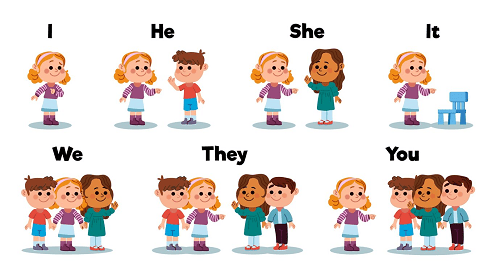
Class 1 tenses are usually required for young learners, beginners, or anyone starting to learn English grammar. This includes:
✅ Students in Grade 1 – Kids just starting school
✅ Beginners learning English – Anyone new to the language
✅ Teachers – To help young students understand basic tenses
✅ Parents – Helping children with homework
Class 1 Tenses refers to the basic tenses taught to young learners or beginners in English. These include:
- Simple Present Tense → I play. / She eats.
- Simple Past Tense → I played. / She ate.
- Simple Future Tense → I will play. / She will eat.
These tenses help students form basic sentences and understand time in actions (past, present, future).
When is Required Class 1 Tenses
Class 1 tenses are required at the beginner level, usually when children start learning English grammar. This typically happens:
✅ In early school years (Grade 1 or 2) – When kids begin forming sentences
✅ When learning English as a second language – For new learners
✅ Before moving to advanced grammar – To build a strong foundation
Class 1 tenses (basic tenses) are used in everyday communication to describe actions in different times:
- Simple Present Tense → Used for daily activities and facts
- Example: I eat breakfast every day. / The sun rises in the east.
- Simple Past Tense → Used for actions that happened before
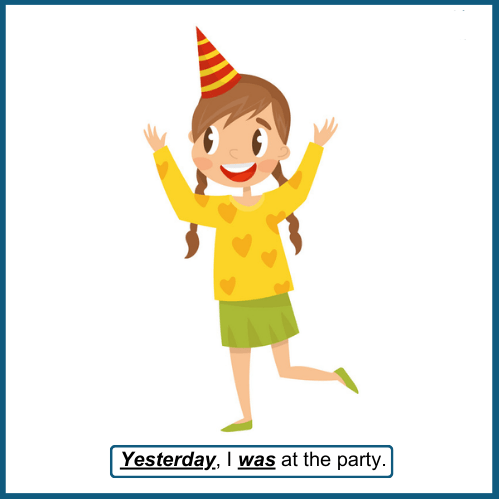
- Example: I played football yesterday. / She danced at the party.
- Simple Future Tense → Used for actions that will happen later
- Example: I will go to school tomorrow. / He will buy a toy.
Where is Required Class 1 Tenses
Class 1 tenses (basic tenses) are required in:
✅ Schools – Taught in early grades to help children form sentences
✅ English Learning Centers – For beginners learning English
✅ Daily Conversations – To talk about past, present, and future events
✅ Storytelling & Writing – To describe actions clearly
Class 1 tenses (basic tenses) are used in:
✅ Everyday Speech – Talking about daily routines, past events, and future plans
✅ School & Exams – Learning grammar in early grades
✅ Storytelling – Describing what happened, what is happening, and what will happen
✅ Writing – Forming simple sentences correctly
How is Required Class 1 Tenses
Class 1 tenses are required because they help young learners:
✅ Understand time in language – Past, present, and future actions
✅ Form simple sentences – “I play,” “I played,” “I will play”
✅ Improve communication – Speak and write correctly
✅ Build a strong grammar foundation – For advanced learning
Class 1 tenses are used to describe actions happening in different times:
How to Use Class 1 Tenses:
1️⃣ Simple Present Tense → For daily activities & facts
- Example: I eat an apple. / The sky is blue.
2️⃣ Simple Past Tense → For actions that already happened
- Example: I played football yesterday. / She danced at the party.
3️⃣ Simple Future Tense → For actions that will happen
- Example: I will go to school tomorrow. / He will buy a toy.
Case Study on Class 1 Tenses
Courtesy- Roving Genius
Title: Enhancing English Grammar Skills in Class 1 Students Through Basic Tense Learning
Introduction
Teaching tenses to Class 1 students is crucial for building a strong foundation in English grammar. This case study examines how young learners grasp the concept of past, present, and future tenses through interactive methods.
Objective
The primary goal of this study is to:
✅ Assess the effectiveness of teaching Simple Present, Past, and Future Tenses.
✅ Identify challenges faced by students in learning tenses.
✅ Explore engaging teaching methods to improve understanding.
Methodology
A group of 30 Class 1 students participated in this study. The teaching methods included:
- Storytelling Approach – Short stories were used to show actions happening in different tenses.
- Flashcards & Visual Aids – Images showing past, present, and future actions.
- Interactive Activities – Role-playing, sentence-building games, and worksheets.
- Songs & Rhymes – Fun songs using different tenses to help retention.
Observations
📌 Simple Present Tense was the easiest to grasp as students could relate it to daily activities.
📌 Simple Past Tense was slightly challenging due to irregular verbs (e.g., go → went).
📌 Simple Future Tense was understood when linked to real-life actions (e.g., Tomorrow, I will…).
Challenges Faced
🔴 Confusion between past and present tense forms.
🔴 Difficulty in remembering irregular past tense verbs.
🔴 Limited vocabulary made sentence formation harder.
Results & Findings
✅ 85% of students showed improvement in forming basic tense-based sentences.
✅ Interactive learning (songs, role-play) was more effective than textbook-based teaching.
✅ Regular practice and real-life examples helped better retention.
Conclusion
Teaching Class 1 tenses requires fun, engaging, and visual methods to ensure understanding. A mix of stories, games, and interactive exercises proved to be the best approach for helping young learners grasp the concept of past, present, and future tenses effectively.
Recommendations
📌 Use daily conversations to reinforce tenses.
📌 Incorporate games and activities rather than rote memorization.
📌 Provide visual examples (e.g., “Yesterday, I played” vs. “Today, I play”).
White paper on Class 1 Tenses
Title: Strengthening Early Language Development: Effective Methods for Teaching Tenses in Class 1
Abstract
This white paper explores the significance of teaching basic tenses (Present, Past, and Future) to Class 1 students. It discusses effective teaching methodologies, challenges faced by young learners, and best practices to improve grammar skills. The paper also provides recommendations for educators and curriculum developers to enhance learning outcomes.
Introduction
Tenses form the backbone of English grammar, helping students understand the concept of time in communication. In early education (Class 1), teaching Simple Present, Simple Past, and Simple Future Tenses is essential for developing strong linguistic skills. However, traditional methods often fail to engage young learners effectively. This paper examines innovative teaching strategies and their impact on learning.
Importance of Teaching Tenses in Class 1
- Helps students communicate clearly and accurately.
- Builds a strong foundation for advanced grammar learning.
- Enhances reading comprehension and writing skills.
- Improves confidence in speaking and storytelling.
Key Tenses Taught in Class 1
- Simple Present Tense – Used for daily activities and facts.
- Example: I eat an apple. / The sun rises in the east.
- Simple Past Tense – Describes completed actions.
- Example: I played with my toy. / She danced at the party.
- Simple Future Tense – Talks about actions that will happen.
- Example: I will go to school tomorrow. / He will buy a toy.
Challenges in Teaching Tenses to Class 1 Students
🔴 Lack of Vocabulary – Limited word knowledge makes sentence formation difficult.
🔴 Difficulty Understanding Time Concepts – Young learners struggle to differentiate past, present, and future.
🔴 Confusion with Irregular Verbs – Example: go → went, eat → ate.
🔴 Short Attention Spans – Traditional teaching methods fail to engage students effectively.
Effective Teaching Strategies
✅ Storytelling Method – Using short stories to illustrate tenses in action.
✅ Songs & Rhymes – Catchy tunes help reinforce tense usage.
✅ Visual Aids & Flashcards – Images of actions happening in different times.
✅ Role-Playing & Games – Interactive activities like “Act & Tell” or “Tense Bingo.”
✅ Daily Conversations – Encouraging students to use tenses in real-life situations.
Case Study: Implementing Tense-Based Learning in Class 1
A study conducted in a primary school with 30 students tested the effectiveness of interactive learning over traditional rote memorization.
- After 8 weeks of storytelling, games, and songs, 85% of students showed improvement in forming correct tense-based sentences.
- Students who practiced tenses through real-life conversations retained knowledge better than those relying on textbooks alone.
Recommendations for Educators & Curriculum Developers
📌 Integrate Play-Based Learning – Make tenses fun through engaging activities.
📌 Use Repetitive Reinforcement – Frequent exposure to tenses through speaking and listening.
📌 Provide Real-Life Contexts – Encourage students to use tenses in daily interactions.
📌 Simplify Irregular Verb Learning – Teach irregular past tense words through visuals and songs.
Conclusion
Teaching Class 1 tenses requires an interactive, engaging, and visual approach. Traditional methods must be supplemented with storytelling, games, and real-life application. Educators should focus on fun-based learning to ensure students grasp Simple Present, Past, and Future Tenses effectively.
Future Research Directions
Further research can explore how technology (apps, animations, and interactive tools) can enhance early grammar learning.
Industrial Application of Class 1 Tenses
Courtesy- NIMISHA BANSAL
At first glance, Class 1 tenses (Simple Present, Simple Past, and Simple Future) seem basic, but they play a crucial role in many industries. Proper tense usage is essential for communication, documentation, customer service, and operations across different fields.
1. Education Industry 📚
- Teachers use Simple Present Tense to give instructions: “Open your books.”
- Past tense is used in storytelling: “Once upon a time, there was a king.”
- Future tense is used for scheduling: “Tomorrow, we will have a test.”
2. Business & Corporate Sector 💼
- Simple Present: Used in official emails and reports: “The company manufactures electronic devices.”
- Simple Past: Documenting past financial performance: “The sales increased by 10% last year.”
- Simple Future: Planning: “We will launch a new product next month.”
3. Healthcare Industry 🏥
- Simple Present: Used in patient diagnosis: “The patient suffers from fever.”
- Simple Past: Medical history documentation: “He had surgery last year.”
- Simple Future: Treatment plans: “You will receive your next dose tomorrow.”
4. Media & Journalism 📰
- Simple Present: News headlines: “Government approves new policy.”
- Simple Past: Reporting past events: “A fire broke out last night.”
- Simple Future: Event announcements: “The minister will visit the city next week.”
5. Customer Service & Hospitality 🏨
- Simple Present: Assisting customers: “Your order arrives in 5 minutes.”
- Simple Past: Resolving complaints: “We processed your refund yesterday.”
- Simple Future: Booking & reservations: “Your table will be ready at 7 PM.”
6. Manufacturing & Logistics 🚛
- Simple Present: Routine operations: “The machine produces 500 units per hour.”
- Simple Past: Tracking shipments: “The package left the warehouse this morning.”
- Simple Future: Delivery schedules: “Your product will arrive on Friday.”
Conclusion
Even the most basic tenses have a major industrial impact. Effective communication in industries depends on correct tense usage for documentation, instructions, reporting, and planning.
References
- ^ Jump up to:a b Fabricius-Hansen, Catherine (2006). “Tense”. In Brown, E.K.; Anderson, A. (eds.). Encyclopedia of Language and Linguistics (2nd ed.). Boston: Elsevier. pp. 566–573.
- ^ Jump up to:a b Comrie, Bernard (1976). Aspect: An Introduction to the Study of Verbal Aspect and Related Problems (Cambridge Textbooks in Linguistics). Cambridge: Cambridge University Press. p. 6. ISBN 978-0521290456.
the semantic concept of time reference (absolute or relative), … may be grammaticalized in a language, i.e. a language may have a grammatical category that expresses time reference, in which case we say that the language has tenses. Some languages lack tense, i.e. do not have grammatical time reference, though probably all languages can lexicalize time reference, i.e. have temporal adverbials that locate situations in time.
- ^ Huang, Nick (2015). “On syntactic tense in Mandarin Chinese”. In Tao, Hongyin (ed.). Proceedings of the 27th North American Conference on Chinese Linguistics (PDF). Vol. 2. Los Angeles: UCLA. pp. 406–423. Archived from the original (PDF) on 2017-10-11. Retrieved 2017-01-08.
- ^ Jump up to:a b Bittner, Maria (2014). Temporality: Universals and Variation. Wiley-Blackwell. ISBN 9781405190404.
- ^ Tonhauser, Judith (January 2015). “Cross-Linguistic Temporal Reference”. Annual Review of Linguistics. 1 (1): 129–154. doi:10.1146/annurev-linguist-030514-124923. ISSN 2333-9683.
- ^ tempus. Charlton T. Lewis and Charles Short. A Latin Dictionary on Perseus Project.
- ^ Harper, Douglas. “tense”. Online Etymology Dictionary.
- ^ Iatridou, Sabine (2000). “The grammatical ingredients of counterfactuality” (PDF). Linguistic Inquiry. 31 (2): 231–270. doi:10.1162/002438900554352. S2CID 57570935. Archived (PDF) from the original on 2018-07-24.
- ^ von Fintel, Kai; Iatridou, Sabine (2020). Prolegomena to a Theory of X-Marking Archived 2020-07-15 at the Wayback Machine. Manuscript.
- ^ Comrie, Bernard (1985). Tense. Cambridge University Press. ISBN 0-521-28138-5.
- ^ Kosur, Heather Marie (November 18, 2021). A Form-Function Description of the Grammar of the Modern English Language: Book 1 (Level 7). Illinois: Rock Pickle Publishing. pp. 80–88, 258–268. ISBN 979-8769812316.
- ^ Kosur, Heather Marie (November 18, 2021). A Form-Function Description of the Grammar of the Modern English Language: Book 2 (Level 8). Illinois: Rock Pickle Publishing. pp. 21–25. ISBN 979-8769826191.
- ^ Nedialkov, Vladimir P.; Otaina, G. A.; Geniushene, E. S.; Gruzdeva, Ekaterina (2013). Syntax of the Nivkh language: The Amur dialect. Amsterdam: John Benjamins Pub. Company.
- ^ Morse, Nancy L.; Maxwell, Michael B. (1999). “Cubeo grammar”. Studies in the languages of Colombia 5. Arlington, TX: The Summer Institute of Linguistics and The University of Texas at Arlington. p. 45.
- ^ Bybee, Joan; Perkins, Revere; Pagliuca, William (1994). The Evolution of Grammar: Tense, Aspect, and Modality in the Languages of the World. Chicago: University of Chicago Press. p. 101.
- ^ Nettle, Daniel (January 1, 1998). The Fyem language of northern Nigeria (Languages of the world). LINCOM Europa.
- ^ Stevick, Earl W. (1971). Adapting and writing language lessons (PDF). Washington, DC: U.S. Foreign Service Institute. p. 302. Archived (PDF) from the original on 2021-07-17. Retrieved 17 July 2021.
- ^ Guillaume Jacques (2023). “Periodic tense markers in the world’s languages and their sources”. Folia Linguistica. 57 (3): 539–562. doi:10.1515/flin-2023-2013.
- ^ Green, Rebecca (1987). A sketch grammar of Burarra (Honours thesis). Canberra: Australian National University. doi:10.25911/5d778709e1631. hdl:1885/109283. Retrieved 17 July 2021.
- ^ Nordlinger, Rachel; Sadler, Louisa (2000). “Tense as a Nominal Category”. In Butt, Miriam; King, Tracy Holloway (eds.). Proceedings of the LFG 00 Conference University of California, Berkeley (PDF). Berkeley: CSLI Publications. pp. 196–214. Archived (PDF) from the original on 2017-02-16. Retrieved 17 July 2021.
- ^ Bittner, Maria (2014). Temporality: Universals and Variation. John Wiley & Sons. ISBN 978-1-4051-9040-4.
- ^ Comrie, Bernard (1985). Tense. Cambridge University Press. ISBN 0-521-28138-5.
- ^ Bittner, Maria (2005). “Future discourse in a tenseless language”. Journal of Semantics. 12 (4): 339–388. doi:10.1093/jos/ffh029.
- ^ Tonhauser, Judith (2011). “Temporal reference in Paraguayan Guaraní, a tenseless language”. Linguistics and Philosophy. 34 (3): 257–303. doi:10.1007/s10988-011-9097-2. S2CID 62125736.
- ^ Daniel Couto-Vale, ‘Report and Taxis in Herodotus’s Histories: a systemic- functional approach to the description of Ancient Ionic Greek’, Nuntius Antiquus, v. 11, n. 1, p. 33–62, 2015
- ^ Huddleston, Rodney; Pullum, Geoffrey K. (15 April 2002). The Cambridge Grammar of the English Language. Cambridge: Cambridge University Press. p. 51. ISBN978-0-521-43146-0. Retrieved 10 February 2015.
- Lay summary in: Peter W. Culicover. “The Cambridge Grammar of the English Language” (PDF). Ohio State University (Review). Archived (PDF) from the original on 2006-01-01.
- ^ Penston, Tony (2005). A Concise Grammar for English Language Teachers. TP Publications. p. 17.
- ^ VAN OLPHEN, HERMAN (1975). “Aspect, Tense, and Mood in the Hindi Verb”. Indo-Iranian Journal. 16 (4): 284–301. doi:10.1163/000000075791615397. ISSN 0019-7246. JSTOR 24651488. S2CID 161530848.
- ^ Qian, Nairong (錢乃榮) (2010). 《從〈滬語便商〉所見的老上海話時態》 (Tenses and Aspects? Old Shanghainese as Found in the Book Huyu Bian Shang). Shanghai: The Chinese University of Hong Kong Press.
- ^ Jump up to:a b c d e f g h i j k Walworth, Mary E. (2015). The Language of Rapa Iti: Description of a Language In Change. Diss (PDF). Honolulu: U of Hawaii at Manoa. Archived (PDF) from the original on 2015-08-25. Retrieved 17 July 2021.
- ^ “Tau Gana Tokelau” (PDF). www.learntokelau.co.nz (1st ed.). New Zealand: Ministry of Pacific Island Affairs. 2017. Archived (PDF) from the original on 2017-03-03.
- ^ Jump up to:a b c Hafford, James A (2014). Wuvulu Grammar and Vocabulary (PDF). Archived (PDF) from the original on 2017-02-11. Retrieved 6 March 2017.
- ^ Odango, Emerson Lopez (May 2015). Afféú Fangani ‘Join Together’: A Morphophonemic Analysis of Possessive Suffix Paradigms and A Discourse-Based Ethnography of the Elicitation Session in Pakin Lukunosh Mortlockese (PDF). University of Hawaii at Manoa Dissertation. Archived (PDF) from the original on 2015-08-25.
- Concise Oxford Dictionary, 9th ed, p1436.
- ↑ Crystal, David 1995. The Cambridge encyclopedia of the English language, p225: ‘Aspects’. Cambridge University Press. ISBN 0-521-40179-8
- Comrie, Bernard (1985). Tense. Cambridge University Press. ISBN 0-521-23652-5.
- ^ Chalker, Sylvia; Weiner, Edmund; Weiner, Edmund S. C. (1998). The Oxford dictionary of English grammar. Oxford paperback reference (Reissued, with corr., in new covers ed.). Oxford: Oxford Univ. Press. ISBN 978-0-19-280087-9.
- ^ Qian, Nairong (錢乃榮) (2010). 《從〈滬語便商〉所見的老上海話時態》 (Tenses and Aspects? Old Shanghainese as Found in the Book Huyu Bian Shang). Shanghai: The Chinese University of Hong Kong Press.
- Don LePan (2003). The Broadview Book of Common Errors in English: A Guide to Righting Wrongs. Broadview Press. pp. 30–31. ISBN 1-55111-586-7.
- ^ Jump up to:a b Merriam-Webster (1994). “sequence of tenses”. Merriam-Webster’s Dictionary of English Usage. Merriam-Webster. p. 838. ISBN 0-87779-132-5.
- ^ Joseph Devlin (1910). How To Speak And Write Correctly. New York: Plain Label Books. pp. 141–142. ISBN 1-60303-053-0.
- ^ Woodcock, E. C. (1959) A New Latin Syntax, pp. 101–3, 135–6, 223–4.
- ^ Woodcock, E. C. (1959), A New Latin Syntax, pp. 19–20.
- ^ Nepos, Hann. 12.3.
- ^ Jump up to:a b c Raphael Kühner (1844). “Succession of Tenses”. Grammar of the Greek Language, for the Use of High Schools and Colleges. translated by Samuel Harvey Taylor and Bela Bates Edwards. New York: Mark H. Newman. pp. 505–506.
- Aerts, Simon (2018). “Tense, Aspect and Aktionsart in Classical Latin: Towards a New Approach”. Symbolae Osloenses 92(1):107–149.
- Andrewes, M. (1937). “Caesar’s Use of Tense Sequence in Indirect Speech”. The Classical Review, Vol. 51, No. 4 (Sep., 1937), pp. 114–116.
- Andrewes, M. (1951). “The Function of Tense Variation in the Subjunctive Mood of Oratio Obliqua“. The Classical Review, New Series, Vol. 1, No. 3/4 (Dec., 1951), pp. 142–146.
- De Melo, Wolfgang (2007). “Latin prohibitions and the Origins of the u/w-Perfect and the Type amāstī”. Glotta, Bd. 83 (2007), pp. 43–68.
- De Melo, Wolfgang (2012). “Kuryłowicz’s first ‘law of analogy’ and the development of passive periphrases in Latin”. In Philomen Probert & Andreas Willi, Laws and Rules in Indo-European. Oxford, chapter 6, pp. 83–101.
- Ernout, Alfred; Thomas, François (1953). Syntaxe Latine (2nd edition). Paris, Klincksieck.
- Gildersleeve, B. L. & Gonzalez Lodge (1895). Gildersleeve’s Latin Grammar. 3rd Edition. (Macmillan)
- Goodrich, W. J. “On the Prospective Use of the Latin Imperfect Subjunctive in Relative Clauses”. The Classical Review, Vol. 31, No. 3/4 (May – Jun., 1917), pp. 83–86.
- Greenough, J. B. et al. (1903). Allen and Greenough’s New Latin Grammar for Schools and Colleges. Boston and London.
- Haverling, Gerd V.M. (2002). “On the semantic functions of the Latin perfect”. Amsterdam Studies in Classical Philology, Volume 10.
- Haverling, Gerd V.M. (2012). “Actionality, tense, and viewpoint”. In Baldi, Philip; Cuzzolin, Pierluigi (eds.) (2012). Constituent Syntax: Adverbial Phrases, Adverbs, Mood, Tense. ISBN 978-3110205633, pp. 277–524.
- Kennedy, Benjamin Hall (1871). The Revised Latin Primer. Edited and further revised by Sir James Mountford, Longman 1930; reprinted 1962.
- Ker, James (2007). “Roman Repraesentatio“. The American Journal of Philology, Vol. 128, No. 3 (Autumn, 2007), pp. 341–365.
- Madvig, J. N. (1842). Discrimen formarum amatus sum et amatus fui. In Opuscula Academica, vol. 2. pp. 218–226.
- Pinkster, Harm (1987). “The Strategy and Chronology of the Development of Future and Perfect Tense Auxiliaries in Latin”. In Martin Harris and Paolo Ramat (eds.) Historical Development of Auxiliaries (Trends in Linguistics. Studies and Monographs, 35). De Gruyter Mouton.
- Pinkster, Harm (1990), Latin Syntax and Semantics. Chapter 11: The Latin tense system.
- Postgate, J. P. (1905). “Repraesentatio Temporum in the Oratio Obliqua of Caesar”. The Classical Review, Vol. 19, No. 9 (Dec., 1905), pp. 441–446.
- Powell, J. G. F. (2005). “Cicero’s adaptation of legal Latin in the de Legibus“. In Reinhardt, T. et al. (eds). Aspects of the Language of Latin Prose. ISBN 9780197263327
- Salmon, E. T. (1931). “A Note on Subordinate Clauses in Oratio Obliqua”. The Classical Review, Vol. 45, No. 5 (Nov., 1931), p. 173.
- Terrell, Glanville (1904). “The Apodosis of the Unreal Condition in Oratio Obliqua in Latin”. The American Journal of Philology, Vol. 25, No. 1 (1904), pp. 59–73.
- Schlicher, J. J. (1931). “The Historical Tenses and Their Functions in Latin”. Classical Philology Vol. 26, No. 1 (Jan., 1931), pp. 46–59.
- Sedgwick, W. B. (1947). “Catullus X: A Rambling Commentary”. Greece & Rome Vol. 16, No. 48, pp. 108–114.
- Viti, Carlotta (2010). “The non-literal use of tenses in Latin, with particular reference to the praesens historicum”. Revue de linguistique latine du Centre Alfred Ernout. (Posted at Zurich Open Repository and Archive, University of Zurich).
- Wheeler, Arthur Leslie, (1903). “The Imperfect Indicative in Early Latin”. The American Journal of Philology, Vol. 24, No. 2 (1903), pp. 163–191.
- Wigtil, David N. (1992) “Translating Latin Tenses into English”. The Classical World, Vol. 85, No. 6 (Jul. – Aug., 1992), pp. 675–686.
- Woodcock, E.C. (1959), A New Latin Syntax.