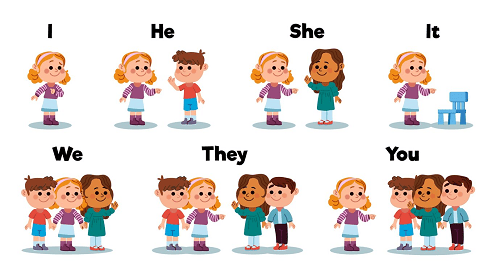
Class 1 Pronouns- Pronouns are words that replace nouns in a sentence to avoid repetition. In Class 1, you typically learn basic personal pronouns. Here are the main types:
1. Personal Pronouns
These replace specific people or things:
- Singular:
- I → (first person)
- You → (second person)
- He/She/It → (third person)
- Plural:
- We → (first person)
- You → (second person)
- They → (third person)
2. Possessive Pronouns
These show ownership:
- Mine, Yours, His, Hers, Its, Ours, Theirs
3. Demonstrative Pronouns
These point to things:
- This, That, These, Those
4. Interrogative Pronouns
Used for asking questions:
Who, Whom, Whose, What, Which
What is Required Class 1 Pronouns
Courtesy- EducationalVideos
However, for most Class 1 (beginner level) English grammar lessons, the required pronouns typically include:
1. Personal Pronouns (Subject Pronouns)
Used to replace a noun as the subject of a sentence.
- I (for yourself)
- You (for the person you are talking to)
- He (for a boy/man)
- She (for a girl/woman)
- It (for animals or things)
- We (for yourself and others)
- They (for other people, animals, or things)
Example Sentences:
- I am happy.
- She is my friend.
- They are playing.
2. Object Pronouns
Used as the object of a verb or preposition.
- Me, You, Him, Her, It, Us, Them
Example Sentences:
- My mom gave me a gift.
- I like her.
- They invited us to the party.
3. Possessive Pronouns
Show ownership or belonging.
- Mine, Yours, His, Hers, Its, Ours, Theirs
Example Sentences:
- This book is mine.
- The red ball is hers.
4. Demonstrative Pronouns
Point to things.
- This, That, These, Those
Example Sentences:
- This is my pencil.
- Those are my shoes.
5. Interrogative Pronouns
Used for asking questions.
- Who, Whom, Whose, What, Which
Example Sentences:
- Who is your teacher?
- What is your name?
These pronouns are required for Class 1 students to understand and use in simple sentences.
Who is Required Class 1 Pronouns
It looks like you are asking “Who are the required Class 1 pronouns?” If you mean the basic pronouns that Class 1 students must learn, they are:
1. Subject Pronouns (Personal Pronouns)
These replace nouns as the subject of a sentence:
- I
- You
- He
- She
- It
- We
- They
Example:
- She is my friend.
- They are playing outside.
2. Object Pronouns
These are used as objects in sentences:
- Me, You, Him, Her, It, Us, Them
Example:
- Mom gave me a gift.
- I like her.
3. Possessive Pronouns
These show ownership:
- Mine, Yours, His, Hers, Its, Ours, Theirs
Example:
- This pencil is mine.
- The toy is his.
4. Demonstrative Pronouns
Used to point out things:
- This, That, These, Those
Example:
- This is my book.
- Those are my shoes.
5. Interrogative Pronouns
Used to ask questions:
- Who, Whom, Whose, What, Which
Example:
- Who is your teacher?
- What is your name?
When is Required Class 1 Pronouns
Class 1 Pronouns are required when:
- Talking about yourself and others
- Example: I am happy. She is my friend.
- Replacing names to avoid repetition
- Example: Instead of “John is playing. John has a ball,” we say:
He is playing. He has a ball.
- Example: Instead of “John is playing. John has a ball,” we say:
- Showing possession
- Example: This book is mine. That toy is yours.
- Pointing to objects
- Example: This is my bag. Those are my shoes.
- Asking questions
- Example: Who is your teacher? What is your name?
Pronouns are required in everyday sentences to make communication easier.
Where is Required Class 1 Pronouns
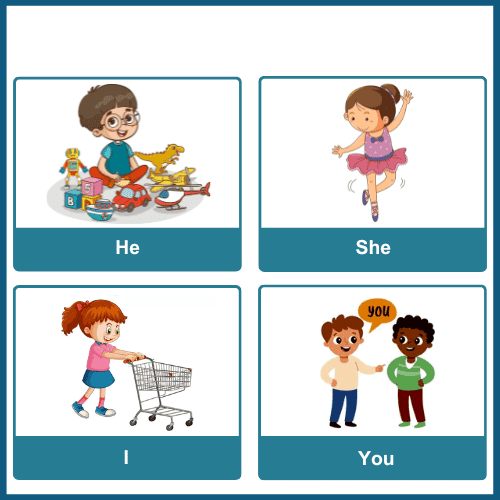
If you’re asking “Where are Class 1 pronouns required?”, they are needed in various places, such as:
1. In Daily Conversations
Pronouns help us speak naturally.
- Example: She is my friend. We are going to school.
2. In Sentences to Replace Nouns
Instead of repeating names, we use pronouns.
- Without pronouns: John likes football. John plays every day.
- With pronouns: He likes football. He plays every day.
3. In Books and Stories
Writers use pronouns to make sentences flow better.
- Example: They lived in a big castle. It was beautiful.
4. In Questions
Interrogative pronouns help us ask for information.
- Example: Who is your best friend? What is your favorite color?
5. In Schoolwork and Grammar Lessons
Students learn and use pronouns in writing exercises, worksheets, and tests.
How is Required Class 1 Pronouns
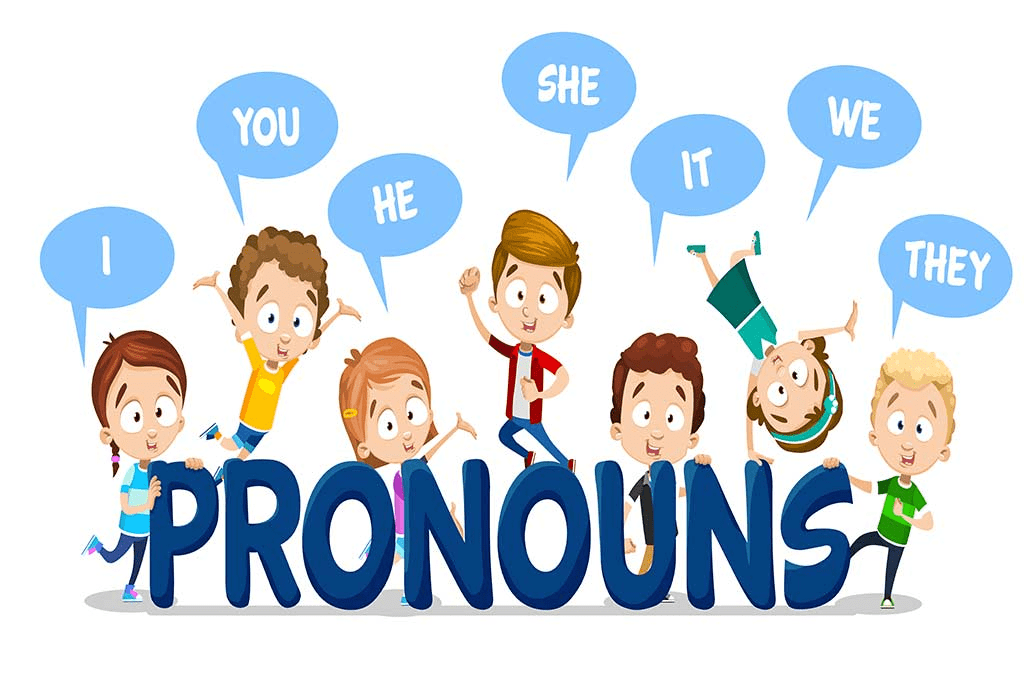
It looks like you’re asking “How are Class 1 pronouns required?”
Class 1 Pronouns are required to:
1. Make Sentences Shorter & Clearer
- Without pronouns: John is a good boy. John helps his mother.
- With pronouns: He is a good boy. He helps his mother.
2. Avoid Repeating Names or Nouns
- Example: Instead of saying “Lisa has a doll. Lisa loves the doll,”
We say: “She has a doll. She loves it.”
3. Show Possession (Ownership)
- Example: This book is mine. That toy is yours.
4. Ask Questions Easily
- Example: Who is your best friend? What is your favorite color?
5. Point Out Things
- Example: This is my pencil. Those are my shoes.
Pronouns help in everyday speech, reading, and writing.
Case Study on Class 1 Pronouns
Courtesy- Periwinkle
Understanding and Teaching Class 1 Pronouns
Introduction
Pronouns are essential in early language development as they help children form sentences more naturally and avoid repetition. This case study explores the teaching methods, challenges, and outcomes of introducing pronouns to Class 1 students.
Background
Grade Level: Class 1 (Ages 5-7)
Topic: Pronouns (Personal, Possessive, Demonstrative, and Interrogative)
Objective: To help students recognize, understand, and use pronouns correctly in sentences.
Methodology
- Lesson Plan Implementation
- Introduction: Begin with a storytelling method using common pronouns like he, she, it, they.
- Interactive Activities:
- Pronoun Matching Game (matching pronouns with pictures)
- Fill in the Blanks (students complete sentences using the correct pronoun)
- Role-Playing (students use pronouns in dialogue)
- Assessment Tools
- Oral and written exercises
- Teacher observations
- A short quiz with simple questions like: What pronoun replaces “John and I”? (Answer: We)
Findings & Challenges
- Findings:
- Fast Learners: Quickly grasped subject pronouns (he, she, they).
- Struggles: Some students found possessive pronouns (mine, yours) confusing.
- Engagement: Games and visual aids helped increase understanding.
- Challenges:
- Pronoun agreement errors (e.g., saying “Me am happy” instead of “I am happy”)
- Overuse of proper nouns instead of pronouns
- Difficulty distinguishing this and that
Conclusion & Recommendations
- Reinforce Learning with Practice: Daily exercises and conversation practice.
- Use More Visual Aids: Charts, flashcards, and interactive storytelling.
- Parental Involvement: Encourage parents to help children use pronouns at home.
White paper on Class 1 Pronouns
Understanding and Teaching Class 1 Pronouns
Abstract
Pronouns play a crucial role in early language development, allowing children to construct sentences more naturally and avoid repetition. This white paper explores the fundamental types of pronouns introduced in Class 1, effective teaching methodologies, challenges faced by students, and recommendations for educators.
1. Introduction
1.1 Importance of Pronouns in Early Learning
Pronouns are essential in simplifying language structure and improving communication efficiency. Teaching Class 1 students pronouns helps them develop sentence-building skills and enhances their ability to express thoughts clearly.
1.2 Scope of Study
This paper focuses on the types of pronouns appropriate for Class 1 learners, common difficulties in comprehension, and strategies for effective teaching.
2. Types of Pronouns Taught in Class 1
2.1 Personal Pronouns
Used to replace nouns in a sentence:
- Singular: I, You, He, She, It
- Plural: We, You, They
2.2 Possessive Pronouns
Used to show ownership:
- Mine, Yours, His, Hers, Its, Ours, Theirs
2.3 Demonstrative Pronouns
Used to point to specific things:
- This, That, These, Those
2.4 Interrogative Pronouns
Used to ask questions:
- Who, Whom, Whose, What, Which
3. Teaching Methodologies
3.1 Storytelling Approach
Using simple stories to introduce pronouns in context helps students understand their usage naturally.
3.2 Interactive Games and Activities
- Pronoun Matching Games: Students match pronouns to corresponding pictures or names.
- Fill-in-the-Blanks Exercises: Encourages sentence formation using the correct pronoun.
- Role-Playing Activities: Students use pronouns in short dialogues.
3.3 Visual Aids and Flashcards
Using visual elements like charts and flashcards improves retention and engagement.
3.4 Repetitive Reinforcement through Songs and Rhymes
Songs and rhymes incorporating pronouns help reinforce learning in a fun and memorable way.
4. Challenges in Learning Pronouns
4.1 Common Errors Among Class 1 Students
- Pronoun Agreement Mistakes: E.g., “Me is happy” instead of “I am happy.”
- Overuse of Proper Nouns: Students may continue using names instead of replacing them with pronouns.
- Confusion with Demonstrative Pronouns: Difficulty distinguishing between “this” and “that.”
4.2 Strategies to Overcome These Challenges
- Regular reinforcement through conversation and storytelling.
- Encouraging students to practice using pronouns in their daily speech.
- Teacher-guided correction and positive reinforcement.
5. Conclusion & Recommendations
5.1 Key Takeaways
- Pronouns are vital for language development in young learners.
- Interactive and engaging teaching strategies enhance comprehension and retention.
- Addressing common errors through targeted activities can improve student outcomes.
5.2 Recommendations for Educators
- Incorporate multimedia resources to make learning more engaging.
- Use everyday conversations to reinforce pronoun usage.
- Provide continuous assessment through quizzes and activities to track student progress.
6. References
[Include relevant sources, curriculum guidelines, and research studies on early childhood language development.]
This white paper aims to provide a structured approach to teaching pronouns in Class 1, ensuring that young learners build a strong grammatical foundation.
Industrial Application of Class 1 Pronouns
Courtesy- Kids Study Zone
It looks like you’re asking about the industrial applications of Class 1 pronouns, but pronouns themselves are not typically categorized in industrial applications. However, if you’re referring to Class 1 pronouns in a specific linguistic or technical context, I’d need more details.
If you mean first-person pronouns (“I” and “we”) in industrial applications, here are some relevant uses:
1. Technical Documentation & Manuals
- Use of “we” in corporate or team-based writing to describe procedures (e.g., “We recommend using safety gloves when handling chemicals.”)
- Use of “I” in personal logs or reports (e.g., “I conducted the pressure test at 10:00 AM.”)
2. Human-Machine Interaction (HMI) & AI Communication
- AI Assistants & Chatbots: Using first-person pronouns (“I” in AI assistants like ChatGPT or industrial bots) to improve user experience.
- Workplace Automation: Machines using pronouns in responses (e.g., “I have detected an issue in the conveyor belt.”)
3. Employee Communication & Reports
- Personal pronouns (“I,” “we”) are used in emails, reports, and presentations to facilitate communication between employees in industrial settings.
4. Marketing & Branding in Industrial Sectors
- Companies use “we” in promotional materials (e.g., “We build the most reliable engines in the industry.”) to create a strong brand identity.
References
- ^ Jump up to:a b Bhat, Darbhe Narayana Shankara (2007). Pronouns (Paperback ed.). Oxford: Oxford University Press. pp. 1. ISBN 978-0199230242.
- ^ Jump up to:a b c d e f g h i j k l Börjars, Kersti; Burridge, Kate (2010). Introducing English grammar (2nd ed.). London: Hodder Education. pp. 50–57. ISBN 978-1444109870.
- ^ Loos, Eugene E.; Anderson, Susan; Day, Dwight H. Jr.; Jordan, Paul C.; Wingate, J. Douglas (3 December 2015). “What is a pronominal?”. Glossary of linguistic terms. SIL International. Archived from the original on 14 November 2018. Retrieved 14 November 2018.
- ^ Crystal, David (1985). A dictionary of linguistics and phonetics (2nd ed.). Basil Blackwell.
- ^ Huddleston, Rodney; Pullum, Geoffrey K. (2002). Cambridge grammar of the English Language. Cambridge: Cambridge University Press.
- ^ For example, Vulf Plotkin (The Language System of English, Universal Publishers, 2006, pp. 82–83) writes: “[…] Pronouns exemplify such a word class, or rather several smaller classes united by an important semantic distinction between them and all the major parts of speech. The latter denote things, phenomena and their properties in the ambient world. […] Pronouns, on the contrary, do not denote anything, but refer to things, phenomena or properties without involving their peculiar nature.”
- ^ Postal, Paul (1966). Dinneen, Francis P. (ed.). “On So-Called “Pronouns” in English”. Report of the Seventeenth Annual Round Table Meeting on Linguistics and Language Studies. Washington, D.C.: Georgetown University Press: 177–206.
- ^ For detailed discussion see George D. Morley, Explorations in Functional Syntax: A New Framework for Lexicogrammatical Analysis, Equinox Publishing Ltd., 2004, pp. 68–73.
- ^ Jump up to:a b Simon, Horst J.; Wiese, Heike (2002). Pronouns – Grammar and Representation. Linguistics Today. p. 190. ISBN 9789027227737.
- ^ Pullum, Geoffrey K. (2024), The Truth About English Grammar, Polity Press, ISBN 978-1509560547
- ^ Walsh, Michael James. 1976. The Muɹinypata Language of Northern Australia. The Australian National University.
- ^ Hercus, Luise Anna (1994). A grammar of the Arabana-Wangkangurru language, Lake Eyre Basin, South Australia. Canberra, Australia: Dept. of Linguistics, Research School of Pacific and Asian Studies, Australian National University. ISBN 0-85883-425-1. OCLC 32850800.
- Katz, Seth R. (2019-12-11), “Pronouns (PRON) and Pronoun Phrases (PRONP)”, American English Grammar, Routledge, pp. 78–95, doi:10.4324/9780429268885-6, ISBN 978-0-429-26888-5, retrieved 2024-12-01
- ^ Jump up to:a b c d e f g h i j k l m n o p q r s t u Huddleston, Rodney; Pullum, Geoffrey K. (2002). The Cambridge grammar of the English language. Cambridge University Press.
- ^ Dixon, R.M.W. (2017-09-06). “The grammar of English pronouns”. Lingua. 200: 33–44. doi:10.1016/j.lingua.2017.08.002.
- ^ Crystal, David (1985). A dictionary of linguistics and phonetics (2nd ed.). Basil Blackwell.
- ^ Huddleston, Rodney; Pullum, Geoffrey K. (2002). Cambridge grammar of the English Language. Cambridge: Cambridge University Press.
- ^ “now | meaning of now in Longman Dictionary of Contemporary English | LDOCE”. www.ldoceonline.com. Retrieved 2021-03-25.
- ^ Terry, Roger (2014-07-01). “What Shall We Do with Thou ? Modern Mormonism’s Unruly Usage of Archaic English Pronouns”. Dialogue: A Journal of Mormon Thought. 47 (2): 1–35. doi:10.5406/dialjmormthou.47.2.0001. ISSN 0012-2157.
- ^ Lagunoff, Rachel (1997). Singular They (Doctoral dissertation). UCLA.
- ^ Abadi, Mark. “‘They’ was just named 2015’s Word of the Year”. Business Insider. Retrieved 2021-03-22.
- ^ Jump up to:a b Payne, John; Huddleston, Rodney (2002). “Nouns and noun phrases”. In Huddleston, Rodney; Pullum, Geoffrey (eds.). The Cambridge Grammar of the English Language. Cambridge; New York: Cambridge University Press. pp. 479–481. ISBN 0-521-43146-8.
We conclude that both head and phrasal genitives involve case inflection. With head genitives it is always a noun that inflects, while the phrasal genitive can apply to words of most classes.
- ^ Some linguists consider that in such sentences to be a complementizer rather than a relative pronoun. See English relative clauses: Status of that.
- ^ “One Definition”. dictionary.com. Retrieved 18 June 2015.
- ^ Fowler 2015, p. 813
- ^ For a treatment of there as a dummy predicate, based on the analysis of the copula, see Moro, A., The Raising of Predicates. Predicative Noun Phrases and the Theory of Clause Structure, Cambridge Studies in Linguistics, 80, Cambridge University Press, 1997.
- ^ “tomorrow | meaning of tomorrow in Longman Dictionary of Contemporary English | LDOCE”. www.ldoceonline.com. Retrieved 2021-03-25.
- ^ “Definition of THAT”. www.merriam-webster.com. Retrieved 2021-03-25.
- ^ “Other, others, the other or another ?”. dictionary.cambridge.org. Retrieved 2021-03-25.
- ^ Fulk, R.D., An Introduction to Middle English, Broadview Press, 2012, p. 65.
- ^ See Stratmann, Francis Henry (1891). A Middle-English dictionary. London: Oxford University Press. OL 7114246M. and Mayhew, AL; Skeat, Walter W (1888). A Concise Dictionary of Middle English from A.D. 1150 to 1580. Oxford: Clarendon Press.
- Crystal, David (1985). A dictionary of linguistics and phonetics (2nd ed.). Basil Blackwell.
- ^ Huddleston, Rodney; Pullum, Geoffrey K. (2002). Cambridge grammar of the English Language. Cambridge: Cambridge University Press.
- ^ Kordić, Snježana (2002). Riječi na granici punoznačnosti [Words on the Border Between Lexicon and Grammar] (PDF) (in Serbo-Croatian). Zagreb: Hrvatska sveučilišna naklada. p. 11. doi:10.2139/ssrn.3467413. ISBN 978-953-169-073-7. LCCN 2009386657. OCLC 54680648. OL 2863537W. CROSBI 426493. Archived (PDF) from the original on 4 June 2012. Retrieved 15 October 2019.
- ^ Verhaar, John W.M. (1995). Toward a reference grammar of Tok Pisin : an experiment in corpus linguistics. Honolulu: Univ. of Hawai’i Press. pp. 354. ISBN 9780824816728.
- ^ Kordić, Snježana (1999). “Personal- und Reflexivpronomina als Träger von Personalität” [Personal pronouns and reflexive pronouns] (PDF). In Jachnow, Helmut; Mečkovskaja, Nina; Norman, Boris; et al. (eds.). Personalität und Person. Slavistische Studienbücher, Neue Folge; vol. 9 (in German). Wiesbaden: Harrassowitz. p. 136. ISBN 978-3-447-04141-6. OCLC 42311684. SSRN 3434465. CROSBI 426625. Archived (PDF) from the original on 24 August 2012. Retrieved 14 April 2019.
- ^ Grohmann, Kleanthes K. (2000). “Towards a Syntactic Understanding of Prosodically Reduced Pronouns” (PDF). Theoretical Linguistics. 26 (3): 175–210. CiteSeerX 10.1.1.128.4860. doi:10.1515/thli.2000.26.3.175. S2CID 9863202. Archived from the original (PDF) on 2012-02-07. Retrieved 2012-08-30.
- ^ Baauw, Sergio. Greenhill, A.; Littlefield, H.; Tano, C. (eds.). “The Role of the Clitic-Full Pronoun Distinction in the Acquisition of Pronominal Coreference” (PDF). BUCLD Proceedings. 23. Somerville, Mass.: Cascadilla Press.
- ^ Louagie, Dana; Verstraete, Jean-Christophe (2015). “Personal pronouns with determining functions in Australian languages”. Studies in Language. 39 (1): 159–198. doi:10.1075/sl.39.1.06lou. ISSN 0378-4177. S2CID 170446424.
- ^ Senge, Chikako. 2015. A Grammar of Wanyjirra, a language of Northern Australia. The Australian National University Ph.D.
- ^ Meakins, Felicity. (12 December 2013). A grammar of Bilinarra : an Australian aboriginal language of the Northern Territory. Nordlinger, Rachel, 1969-. Boston. ISBN 978-1-61451-274-5. OCLC 874162898.
- ^ Tsunoda, Tasaku. (2011). A Grammar of Warrongo. Berlin: De Gruyter Mouton. ISBN 978-3-11-023877-8. OCLC 772845197.
- ^ Haviland, John. 1979. Guugu Yimidhirr. In R. M. W. Dixon & Barry J. Blake (eds.), Handbook of Australian Languages: Volume 1, 27–182. Amsterdam: John Benjamins Publishing Company.
- ^ Jump up to:a b Bowern, Claire, 1977- (2013). A grammar of Bardi. Berlin: De Gruyter Mouton. ISBN 978-3-11-027818-7. OCLC 848086054.
- ^ McGregor, William, 1952- (1990). A functional grammar of Gooniyandi. Amsterdam: J. Benjamins Pub. Co. ISBN 978-90-272-8205-7. OCLC 750192300.
- ^ Fasolo, Silvano (ed.). 2008. Basic Wangkatja Grammar. Kalgoorlie, WA: Karlkurla Language & Culture Aboriginal Corporation.
- ^ Anderson, Stephen R. (2005). Aspects of the theory of clitics. New York: Oxford University. ISBN 978-0-19-927990-6. OCLC 60776789.
- ^ O’Shannessy, Carmel. 2013. THE ROLE OF MULTIPLE SOURCES IN THE FORMATION OF AN INNOVATIVE AUXILIARY CATEGORY IN LIGHT WARLPIRI, A NEW AUSTRALIAN MIXED LANGUAGE. Language. Linguistic Society of America 89(2). 328–353.
- ^ Ngaanyatjarra & Ngaatjatjarra to English dictionary. Glass, Amee., Hackett, Dorothy. Alice Springs, NT: IAD Press. 2003. ISBN 1-86465-053-2. OCLC 56201860.
- “‘One’ cambridge dictionary definition”. Guide to Grammar and Writing. Retrieved 15 May 2014.
- ^ Jump up to:a b Huddleston, Rodney; Pullum, Geoffrey K. (2002). The Cambridge grammar of the English language. Cambridge University Press.
- ^ Lass, Roger, ed. (1999). The Cambridge history of the English Language: Volume III 1476–1776. Cambridge: Cambridge University Press.
- ^ Harper, Douglas (ed.). “one”. Online Etymology Dictionary. Retrieved 2021-03-27.
- ^ Blake, Norman, ed. (1992). The Cambridge history of the English Language: Volume II 1066–1476. Cambridge: Cambridge University Press.
- ^ Jump up to:a b “One”, entry in The Oxford English Dictionary, second edition, edited by John Simpson and Edmund Weiner, Clarendon Press, 1989, twenty volumes, hardcover, ISBN 0-19-861186-2.
- ^ Harper, Douglas (ed.). “oneself”. Online Etymology Dictionary. Retrieved 2021-03-27.
- ^ Crystal, David (1985). A dictionary of linguistics and phonetics (2nd ed.). Basil Blackwell.
- ^ Huddleston, Rodney; Pullum, Geoffrey K. (2002). Cambridge grammar of the English Language. Cambridge: Cambridge University Press.
- ^ Huddleston, Rodney; Pullum, Geoffrey K. (2002). The Cambridge grammar of the English language. Cambridge: Cambridge University Press.
- ^ Emilia Di Martino, Monica Pavani, “Common and Uncommon Readers: Communication among Translators and Translation Critics at Different Moments of the Text’s Life”. In Authorial and Editorial Voices in Translation 1: Collaborative Relationships between Authors, Translators, and Performers, Hanne Jansen and Anna Wegener (eds.), Montréal: Éditions québécoises de l’œuvre, collection Vita Traductiva, 2013.
- ^ “One is not amused”, metro.co.uk, 25 October 2014.
- ^ “Annus horribilis speech, 24 November 1992”. The Official Website of the British Monarchy. Archived from the original on 2 March 2009.
- ^ “How the Queen became our Lilibet”. The Guardian. 23 May 2002. Retrieved 15 June 2021.
- ^ “Queen of the spinners”. NewStatesman. 30 May 2012. Retrieved 15 June 2021.
- ^ Katie Wales, Personal Pronouns in Present-Day English, CUP 1996, p. 81.