
Drawing or Painting from Nature
Drawing or painting from nature is a practice that involves observing and capturing the natural world, either directly or through reference, on paper or canvas. This approach has been central to art education and artistic practice for centuries. The process typically includes the following steps:
1. Observation
- Study of Elements: Artists closely examine natural elements such as plants, animals, landscapes, or human figures. This requires keen attention to detail, including textures, light, and shadows, shapes, and the intricate structures of the subject.
- Focus on Form and Proportion: One of the goals of working from nature is to accurately portray the form and proportion of the subject. Artists may use tools like rulers, compasses, or simply their eyes to compare the size and shape relationships between elements.
2. Composition
- Framing: Choosing the right view or angle is essential. Artists decide what parts of nature to emphasize and how to arrange them within the frame or canvas.
- Balance and Harmony: Composition involves arranging the elements so that the work feels balanced. For example, a large tree might be balanced by a small rock or the use of space might be distributed to lead the viewer’s eye through the piece.
3. Medium and Technique
- Drawing: Artists may use pencils, charcoal, or ink to create sketches. The focus is on line, shading, and texture.
- Painting: Artists may use watercolors, oils, or acrylics to paint. Each medium offers different textures and approaches to capturing the natural world, from transparent washes in watercolor to thick, impasto brushstrokes in oils.
- Details and Textures: Nature is full of intricate details like the veins of leaves, the rough texture of tree bark, or the soft folds of fabric on a person. Artists use various techniques, such as cross-hatching in drawing or stippling, to represent these textures.
4. Color and Light
- Color Accuracy: Nature offers an array of vibrant colors. An artist must decide how to mix or choose colors to match what they observe. Light conditions, such as during the golden hour (early morning or late afternoon), can greatly influence the mood and color palette.
- Shading and Light: Artists pay attention to how light affects the subject, creating highlights and shadows. The direction of the light can change the way textures and forms are perceived.
5. Interpretation
- While artists aim for accuracy, there is also room for personal interpretation. Artists may simplify, exaggerate, or stylize their subject matter to communicate emotion or narrative.
- Expressing Mood: The colors and techniques used in the painting or drawing can evoke a particular feeling—serenity, power, joy, or sadness.
6. Practice and Development
- Nature Studies: Artists often create numerous studies or sketches of nature before creating a final piece. These studies help them better understand their subject and refine their technique.
- Field Sketching: This is the practice of drawing directly from nature in outdoor settings, whether it’s sketching a tree in the park, mountains in the distance, or a flower in the garden. This helps artists capture the changing light, wind, and atmosphere of the moment.
Drawing and painting from nature help artists hone their observational skills, deepen their understanding of their medium, and connect more deeply with the world around them. It’s not only an exercise in skill but also an expression of the artist’s relationship with the environment .
What is Drawing or Painting from Nature ?
Drawing or painting from nature refers to the artistic practice of observing and depicting the natural world, including landscapes, plants, animals, and other elements of the environment, directly onto a medium like paper, canvas, or other surfaces. This approach emphasizes close observation and aims to capture the details, forms, and textures of nature as accurately as possible, or sometimes with artistic interpretation.
Key Aspects of Drawing or Painting from Nature:
- Direct Observation: Artists work from life or real-world scenes, rather than relying on imagination or photos. This practice helps develop keen observational skills and an understanding of how light, shadow, color, and texture interact in the natural world.
- Accuracy and Realism: Traditionally, drawing or painting from nature was used to study and replicate nature’s appearance accurately, emphasizing proportion, detail, and perspective. This includes accurately representing things like plant leaves, tree bark, the texture of water, or animals.
- Techniques and Mediums:
- Drawing: Artists may use pencil, charcoal, ink, or other mediums to create lines and shading that capture the form and texture of natural objects.
- Painting: Watercolors, oils, and acrylics are commonly used to depict natural scenes. Techniques vary depending on the medium but often include blending, layering, and glazing to achieve realistic effects.
- The Study of Nature: The practice involves focusing on different elements of nature such as:
- Landscapes: Mountains, rivers, forests, fields, or coastal scenes.
- Botanical Subjects: Flowers, trees, leaves, and plants, often requiring attention to intricate details like veins and textures.
- Wildlife: Birds, animals, and insects, with an emphasis on capturing their form and movement.
- Artistic Expression: While realism is a key focus, many artists interpret nature in their own unique ways, adjusting colors, exaggerating forms, or using abstract elements to express mood or feeling.
- Benefits: Drawing or painting from nature enhances artistic skill by improving observation, understanding of natural textures and colors, and mastery over various techniques. It also fosters a deeper connection to the environment.
This practice has been fundamental in art history, influencing movements such as the Renaissance and Impressionism, and continues to be a cornerstone of art education today.
Who is required Drawing or Painting from Nature ?
Drawing or painting from nature is a practice that can benefit and be pursued by various individuals, particularly in the following contexts:
1. Artists and Art Students
- Developing Skill: For professional artists or those training in visual arts, drawing or painting from nature is an essential exercise to develop observational skills, understand proportions, and master techniques.
- Realism and Accuracy: Artists who aim to create realistic or representational work often use nature as a reference to capture its true form, texture, and color.
- Enhancing Creativity: While drawing from life, artists may also interpret and stylize nature, pushing their creative boundaries and experimenting with different techniques.
2. Art Educators and Teachers
- Teaching Fundamental Techniques: Art teachers often encourage students to draw or paint from nature to teach basic principles like proportion, perspective, shading, and composition.
- Understanding Natural Elements: Nature studies help students understand how to observe light, shadow, and texture in real-world settings, which are essential components of visual art.
3. Nature Lovers and Hobbyists
- Personal Enjoyment: People with a passion for nature who enjoy outdoor activities, such as hiking or gardening, may take up drawing or painting as a way to connect more deeply with their surroundings and document their experiences.
- Relaxation and Mindfulness: Nature drawing or painting can be a calming and meditative activity, encouraging mindfulness and fostering an appreciation for the beauty of the natural world.
4. Architects and Designers
- Concept Development: Architects and landscape designers may sketch natural elements to inspire their designs or understand how specific natural features can be integrated into their plans.
- Understanding Form and Function: Observing natural forms closely helps in understanding structure, texture, and function, which can be translated into design solutions.
5. Scientists and Naturalists
- Documenting Species and Ecosystems: Botanists, zoologists, and ecologists sometimes use drawing or painting as a tool for documenting species, plants, animals, or ecosystems. These sketches can serve as valuable scientific records, particularly before photography or digital technology became widely available.
- Studying Nature: Artists in the field of scientific illustration use art to accurately represent biological subjects for educational and research purposes.
6. Therapists and Educators in Creative Therapy
- Art Therapy: Drawing or painting from nature is often used in art therapy as a method of self-expression, helping individuals work through emotions or stress while reconnecting with the environment.
- Educational Programs: Some educational programs use nature-based art to teach mindfulness, environmental appreciation, and emotional wellness.
In summary, drawing or painting from nature is useful for anyone interested in improving their observation skills, understanding the natural world better, and using art as a form of expression or education. It is required or encouraged in both professional contexts (artists, designers, architects) and personal or recreational contexts (hobbyists, students, nature lovers).
Drawing or painting from nature is often required or highly beneficial at various points in an artist’s or individual’s journey, and in different contexts. Here are some key moments when it is required or strongly encouraged:
When is required Drawing or Painting from Nature ?
1. In Art Education
- Early Stages of Artistic Learning: In formal art education, drawing from nature is often required in the early stages to help students develop basic skills such as observation, accuracy, and understanding of light, shadow, and perspective.
- Foundational Training: Whether in high school art classes or at an art academy, students are typically encouraged to create studies of natural subjects (plants, landscapes, human figures) to learn fundamental techniques and improve their eye for detail.
- Life Drawing Classes: Drawing or painting from nature is essential in life drawing, where students are required to sketch from real human models, studying anatomy and proportions.
2. For Professional Artists
- Before Starting a Major Work: Many artists use nature as a reference or create preliminary sketches before starting a more detailed painting or sculpture. This helps them capture the subject’s essence and fine-tune details.
- When Seeking Inspiration: Artists often turn to nature when they are seeking inspiration for their work, especially when creating landscape or botanical art. It’s common to work outdoors to capture the lighting and atmosphere of a scene.
- To Hone Skills: Even experienced artists will return to nature periodically to refine their skills, such as improving their ability to render textures, handle natural light, or understand composition.
3. During Field Studies or Plein Air Painting
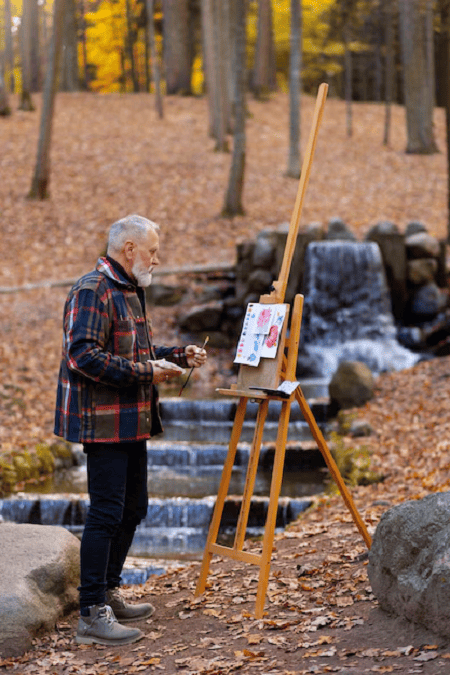
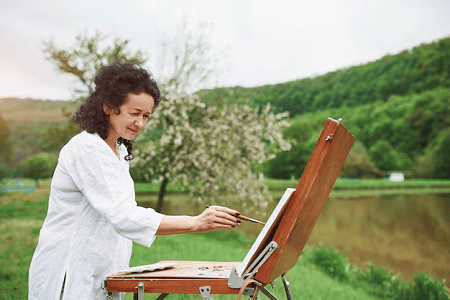
- Plein Air Painting: This involves painting outdoors, directly from the landscape, often in the open air. It is a method where artists work quickly to capture the fleeting effects of light, weather, and atmosphere. This is commonly done during trips or expeditions in natural settings like forests, beaches, or parks.
- Scientific and Botanical Illustration: When documenting plants, animals, or ecosystems, scientists and illustrators often need to draw or paint from nature to record accurate details for research or educational purposes.
4. In Creative and Environmental Contexts
- Nature Journaling: Many people are encouraged to take up drawing or painting from nature as part of nature journaling. This is often done during walks, hikes, or camping trips, allowing individuals to observe and record their experiences with the environment.
- Mindfulness and Relaxation: Nature drawing or painting is sometimes practiced as a therapeutic activity, helping individuals to reconnect with nature, calm their minds, and focus on the present moment.
5. When Developing Design or Architecture Concepts
- Architectural or Landscape Design: Architects, urban planners, and landscape designers often sketch natural elements when they are in the early phases of developing new projects. These sketches help inform the integration of natural features into their designs and ensure they align with the surroundings.
- Environmental Design: Environmental artists and designers often draw or paint natural settings to visualize how human-made structures will coexist with nature, whether in sustainable architecture or green spaces.
6. In Therapeutic Contexts
- Art Therapy: Nature-based drawing or painting is encouraged during art therapy sessions, particularly when helping individuals explore their emotions or reconnect with their surroundings. It is often used as a tool for emotional expression, self-reflection, and stress relief.
7. When Documenting or Preserving Nature
- Conservation and Documentation: For those working in fields like conservation, biology, or zoology, drawing from nature is essential when documenting species, ecosystems, or habitats. It is often required when photographic documentation is not feasible or to capture details that photography might miss.
- Historical Record: Before the advent of photography, artists were often required to create accurate depictions of natural phenomena, plants, or animals for scientific and historical records.
8. Personal Exploration and Hobby
- Nature Walks and Travel: Individuals who enjoy art as a hobby might find themselves sketching or painting from nature when they are traveling, hiking, or simply spending time outdoors. It’s a way to capture and preserve personal experiences and observations of the world around them.
- Art as a Relaxation or Meditation Practice: For those seeking a mindful, creative outlet, drawing or painting from nature is often an activity done for personal enjoyment, away from daily stresses. It is typically done when one seeks a break or a calming connection with nature.
In Summary:
Drawing or painting from nature is required or highly encouraged in many situations, whether it’s to learn foundational art skills, develop professional works, engage in outdoor or field studies, or simply enjoy the creative process in a relaxed, personal way. It is also a vital tool for documenting and understanding the natural world, whether for scientific, environmental, or artistic purposes
Where is required Drawing or Painting from Nature ?
Drawing or painting from nature is required or encouraged in various settings, depending on the individual’s goals, profession, or interests. Here are some key locations or contexts where this practice is essential or highly beneficial:
1. Art Schools and Educational Institutions
- Art Classes and Studios: In art schools, drawing from nature is a foundational part of the curriculum, whether in formal classrooms, studios, or outdoor spaces like botanical gardens or parks.
- Life Drawing Studios: In life drawing classes, artists are often required to observe and draw human models, emphasizing accurate representation of the human form. Some classes may also focus on drawing from nature through still life or outdoor studies.
- Plein Air Classes and Workshops: Some art schools offer specific classes where students go outdoors to practice plein air painting, drawing inspiration from real-life landscapes and natural settings.
2. Outdoor Locations and Natural Environments
- Parks, Gardens, and Nature Reserves: Artists often draw or paint from nature in public or private gardens, nature reserves, or national parks. These locations provide diverse natural subjects like trees, plants, animals, and changing weather conditions.
- Hiking Trails and Wilderness Areas: When artists or students engage in plein air painting or nature journaling, they often venture into hiking trails, mountain ranges, forests, or other natural environments to capture landscapes, flora, and fauna.
- Beaches, Rivers, and Lakesides: These locations are popular for outdoor sketching and painting, offering dynamic views of water, sky, and land, as well as unique light effects.
3. Artist Residencies and Retreats
- Nature-Focused Artist Residencies: Many artist residencies are located in scenic or remote locations, such as mountain villages, coastal areas, or secluded countryside retreats. These environments are specifically designed to encourage artists to create work inspired by nature.
- Art Retreats in Natural Settings: Art retreats that focus on connecting artists with the environment often involve nature walks, outdoor sketching, and painting to help participants gain inspiration from their surroundings.
4. Museums and Botanical Gardens
- Botanical Gardens: Artists often visit botanical gardens to observe and paint various plant species, flowers, and trees. These controlled environments offer opportunities to study plants closely without the distractions of the wild.
- Natural History Museums: Artists may draw from nature by observing specimens of animals, plants, or geological formations found in museums or science exhibits. Some museums also offer drawing workshops or have designated areas for artists to sketch.
5. Fieldwork Locations (for Scientists and Illustrators)
- Field Research Stations: Scientific illustrators, botanists, zoologists, and ecologists often work in field research stations, where they need to document species and ecosystems through drawing or painting. These locations are typically in remote or ecologically rich areas.
- Expeditions and Nature Surveys: During scientific expeditions to study wildlife, plants, or geological features, drawing or painting from nature is used to record observations in the field before they can be analyzed in a lab or office setting.
6. Workshops and Creative Spaces
- Nature Drawing Workshops: Specialized workshops may take place in outdoor locations, like forests, beaches, or botanical gardens, where artists can learn techniques for capturing natural subjects in their drawings and paintings.
- Community Art Centers: Some community art centers or creative spaces encourage outdoor sketching sessions, where individuals gather to draw or paint natural landscapes as part of group activities or art classes.
7. Museums and Galleries with Special Exhibits
- Temporary Exhibits and Outdoor Installations: Some galleries or museums may host temporary outdoor exhibits or plein air painting events, where artists are invited to create work inspired by the surrounding natural environment.
- Conservation and Environmental Art Projects: Many museums or environmental organizations host art projects that focus on nature and conservation, inviting artists to create work that explores and documents the natural world.
8. Urban Spaces and Public Locations
- Urban Parks and Green Spaces: Even in cities, urban parks, gardens, and green spaces can be a rich source of inspiration for artists. Locations like Central Park in New York or Hyde Park in London offer both natural beauty and a chance for artists to practice drawing and painting from life.
- Public Art and Nature Trails: Some public spaces encourage drawing and painting from nature, such as walking trails that are lined with outdoor artwork, murals, or designated spaces for artists to create.
9. Therapeutic and Wellness Locations
- Therapy Centers and Wellness Retreats: Art therapy programs often incorporate nature as a healing tool, where drawing or painting from nature is done in calm, natural settings, such as retreat centers, gardens, or nature reserves.
- Stress Relief and Mindfulness Programs: Nature-based art activities are often incorporated into mindfulness and stress-relief programs, held in tranquil natural environments like gardens, beaches, or secluded retreats.
10. Personal Spaces and Home Studios
- Home or Studio Settings: Artists or hobbyists can create their own space to draw or paint from nature. Some artists choose to bring elements of nature indoors, such as plants, flowers, or natural objects, to use as reference material in their studios.
- Outdoor Home Studios: Some artists create outdoor studios or workspaces in their gardens or terraces, where they can sketch, paint, and engage with nature without leaving home.
In Summary:
Drawing or painting from nature is required or encouraged in a variety of locations, from art schools, outdoor environments, and research stations to botanical gardens, workshops, and urban parks. Whether for professional artistic development, scientific documentation, creative inspiration, or therapeutic purposes, nature provides endless opportunities for artists and individuals to engage directly with the natural world.
How is required Drawing or Painting from Nature ?
Drawing or painting from nature is required in various ways, depending on the context—whether for educational, professional, creative, or therapeutic purposes. Here’s how it is typically required or encouraged:
1. For Artistic Skill Development
- Observation and Accuracy: Drawing or painting from nature requires artists to focus on observation, attention to detail, and accuracy. By directly studying natural forms, artists learn how to replicate textures, proportions, and light effects, all of which are crucial for developing technical skills in drawing and painting.
- Learning to Capture Light and Shadow: Nature offers ever-changing lighting conditions. Artists need to study how light interacts with surfaces in different times of the day, weather conditions, and seasons. This is especially important for plein air (outdoor) painting, where understanding and capturing the effects of light is essential.
- Understanding Perspective and Depth: Drawing from nature teaches artists how to translate three-dimensional space onto a two-dimensional surface, helping them learn perspective, depth, and scale.
2. For Artistic Creativity and Expression
- Inspiration from Natural Forms: Artists draw or paint from nature to gain inspiration for their creative projects. The diversity of colors, textures, and compositions in nature allows artists to express their ideas and emotions through landscapes, portraits of plants or animals, and other natural subjects.
- Translating Nature to Art: Nature provides a wealth of visual stimuli, from landscapes and animals to the intricate details of leaves and flowers. Artists often aim to not just replicate what they see, but to interpret and transform it creatively—focusing on the beauty, movement, or emotional quality of the scene.
3. In Art Education
- Drawing from Life: Students in art schools and workshops are often required to practice drawing from nature as part of their foundational training. This process builds important skills like observation, understanding proportions, and mastering the use of various media (pencil, charcoal, watercolor, etc.).
- Life Drawing and Still Life: In many art programs, drawing from life (such as human figures or natural objects like fruit, plants, or flowers) is a required part of the curriculum. This practice helps students develop an understanding of anatomy, texture, and the intricacies of the natural world.
4. For Scientific and Technical Illustration
- Botanical and Zoological Illustration: Scientific illustrators are required to study nature closely to produce accurate representations of plants, animals, and ecosystems. These illustrations serve as important tools in research and education, helping scientists document species and their environments.
- Field Studies: Biologists, ecologists, and environmental scientists often require accurate drawings or paintings to document their field observations. Drawing from nature allows these professionals to capture the details of ecosystems, species, or natural phenomena that may not be easily conveyed through photographs alone.
5. For Therapeutic and Relaxation Purposes
- Art Therapy: Drawing or painting from nature is frequently used in art therapy settings, where individuals are encouraged to express emotions, reduce stress, or heal through creative activities. Nature’s calming effect provides a supportive environment for this process.
- Mindfulness and Connection to Nature: Engaging with nature through art can help individuals develop a deeper connection to the natural world. This process is often used in mindfulness practices to increase awareness and promote mental well-being.
6. In Professional and Environmental Design
- Architectural and Landscape Design: In fields like architecture and landscape design, drawing or painting from nature is required to understand how natural elements can be integrated into designs. Landscape architects, for example, may need to create studies of natural environments to inform their designs of parks, gardens, or public spaces.
- Environmental Art: Artists working in the environmental art field often use nature as both inspiration and medium. Their works might involve using natural materials, capturing the beauty of natural landscapes, or even addressing environmental issues through their art.
7. For Plein Air Painting
- Outdoor Painting: Plein air painting, where artists work outdoors to capture real-time views and scenes, requires drawing or painting from nature. This method pushes artists to work quickly and adapt to changing light, weather, and environmental conditions, capturing a moment in time.
- Spontaneity and Improvisation: Plein air painting demands a sense of spontaneity. Artists must be prepared to work quickly, adapting to the changing elements of nature, and must be comfortable with the unpredictability of working outdoors.
8. In Personal or Hobbyist Art
- Nature Journaling: Many amateur artists engage in nature journaling, where they draw or paint elements of nature they encounter on walks, hikes, or travels. This practice allows them to improve their skills while also appreciating and documenting the natural world.
- Home Studios or Gardens: Drawing or painting from nature is often done in personal settings, such as an artist’s home studio or outdoor garden. Hobbyists and professionals alike may choose to work in these quiet, personal spaces to focus on capturing the beauty of natural subjects.
9. In Conservation and Documentation
- Conservation Art: Artists and illustrators working in conservation often create works that document endangered species, habitats, or environmental changes. Drawing and painting from nature is required to capture a true representation of these elements before they are altered or lost due to human activity or climate change.
- Historical and Cultural Preservation: In some cases, drawing from nature is used to preserve cultural or historical knowledge about the environment. For instance, historical botanical drawings were essential in the study and preservation of native plants before the development of modern photography.
10. For Emotional and Spiritual Connection
- Personal Expression: For many people, drawing or painting from nature is a way to engage in a personal form of expression. It allows individuals to connect emotionally and spiritually with their environment, drawing inspiration from the natural world to express their inner thoughts and feelings.
- Rejuvenation and Reflection: Artists often find solace in nature, drawing or painting as a means of reflecting, relaxing, and rejuvenating. It provides a space for creative flow and introspection.
In Summary:
Drawing or painting from nature is required or highly beneficial in a variety of contexts. Whether it’s to build technical skills in art education, create scientific illustrations, capture the essence of the outdoors in plein air painting, or simply for personal reflection and healing, the practice serves a wide array of purposes. It allows individuals to observe, document, and creatively express the beauty and complexity of the natural world.
Case study is Drawing or Painting from Nature ?
A case study related to drawing or painting from nature would typically focus on a specific instance or project where artists or individuals engaged with the natural world as a subject matter or medium. It could explore how drawing or painting from nature was used to achieve particular objectives in art, science, therapy, or conservation. Below is an example of how such a case study might be structured:
Case Study: The Role of Drawing from Nature in Environmental Art
Objective:
This case study explores the use of drawing and painting from nature in the field of environmental art. It focuses on how artists use nature as both inspiration and medium to raise awareness of environmental issues, preserve threatened ecosystems, and engage the public in conversations about conservation.
Background:
Environmental art is an art movement that emerged in the late 20th century, often addressing ecological concerns, environmental preservation, and human interactions with the natural world. Artists working in this field use nature as both a source of inspiration and a medium, with many of them creating art directly within natural settings. Some environmental artists focus on creating temporary works of art that are meant to highlight the fleeting beauty of the environment, while others create more permanent pieces that engage communities in environmental activism.
Key Example:
One notable example is Andy Goldsworthy, an artist known for his work in environmental and land art, who often creates art directly in natural settings using materials found in nature. Goldsworthy’s approach is a perfect example of how drawing and painting from nature can be used not only for artistic expression but also as a form of environmental commentary.
Process:
- Initial Observation and Fieldwork:
- Artists like Goldsworthy often begin by spending time in nature, observing natural forms, materials, and landscapes. Goldsworthy, for example, spends extended periods in forests, rivers, and fields, observing how light, shadows, textures, and natural materials interact within the environment.
- Drawing and Painting:
- As part of his process, Goldsworthy often sketches or makes quick studies to capture the natural forms he sees. These sketches help him plan his installations or paintings, but they are also valuable as standalone pieces. These drawings allow him to develop a deeper understanding of the landscape before he creates large-scale works using found materials.
- Creating the Artworks:
- Once the initial sketches are made, artists move forward to create the actual art, which can range from temporary sculptures made from ice, leaves, and stones to permanent works like land installations or paintings on canvas inspired by the natural world.
- Public Engagement and Advocacy:
- Many artists, including those working in the environmental art movement, use their work to advocate for the preservation of the environments they draw inspiration from. For example, Goldsworthy’s art installations are often short-lived, emphasizing the transitory beauty of nature and drawing attention to environmental degradation. His works are documented through photography and video, which can be shared globally to raise awareness.
Outcomes:
- Artistic Impact:
- Goldsworthy’s work, particularly his drawings and nature-based sculptures, has been widely celebrated for its ability to highlight the beauty and fragility of natural environments. His work is not just a visual representation of nature but also a call to action about the importance of conservation.
- Environmental Awareness:
- Through this type of art, viewers are reminded of the delicate balance within ecosystems and the urgent need to protect nature. The ephemeral nature of many environmental artworks invites reflection on the impermanence of the world around us.
- Cultural and Educational Influence:
- Educational programs, workshops, and exhibitions based on Goldsworthy’s method of drawing from nature are held around the world. They encourage individuals, particularly children, to observe the world around them and engage creatively with nature.
Challenges:
- Environmental Factors: Drawing or painting from nature often involves working outdoors, which can be subject to changing weather conditions. Artists may need to adapt their techniques based on the elements (e.g., wind, rain, or intense sunlight).
- Preservation: Temporary environmental artworks can be vulnerable to natural processes like wind, rain, and decay. While this impermanence is often part of the message, it poses a challenge for artists who wish to preserve their work long-term.
Conclusion:
Drawing and painting from nature plays a significant role in environmental art, providing both a medium of artistic expression and a platform for environmental advocacy. By engaging directly with the natural world, artists like Andy Goldsworthy create works that are both visually striking and deeply thought-provoking, encouraging viewers to appreciate the fleeting beauty of nature while simultaneously raising awareness about its fragility. This case study demonstrates how drawing and painting from nature can be employed not only for artistic achievement but also for broader cultural and environmental goals.
This example of a case study demonstrates the profound impact of drawing and painting from nature within the context of environmental art. It shows how this practice can be used not only for aesthetic purposes but also for social and ecological change, illustrating the multidimensional role of art in the modern world.
White paper on Drawing or Painting from Nature ?
White Paper: Drawing and Painting from Nature
Abstract: Drawing and painting from nature is a foundational practice in art education, artistic exploration, and environmental advocacy. This white paper explores the importance of this artistic tradition, its applications across different disciplines, and its relevance in contemporary society. It examines how engaging with nature through drawing and painting enhances technical skills, fosters creativity, contributes to environmental awareness, and supports mental well-being. The paper also highlights the various contexts in which this practice is employed, from formal art education to professional artistic practices and ecological conservation.
Introduction
Drawing and painting from nature, often referred to as “plein air” art or nature study, is one of the oldest and most revered artistic traditions. For centuries, artists have ventured outdoors to observe and capture the natural world through their work. This practice not only allows artists to hone their technical skills, such as drawing, shading, and color theory, but also provides a means of connecting with the environment on a deeper level.
In the modern world, the act of drawing or painting from nature remains as relevant as ever. It serves as a bridge between the artist and the natural world, offering both a creative outlet and a tool for reflecting on environmental issues. This white paper aims to explore the various facets of drawing and painting from nature, its benefits, and its applications across multiple fields.
1. The Importance of Drawing and Painting from Nature
1.1 Skill Development in Art
Drawing and painting from nature is essential in developing a variety of artistic skills:
- Observation: Artists learn to closely observe the world around them, capturing fine details and subtle changes in light, color, and texture.
- Technical Mastery: The process of replicating natural forms challenges artists to master techniques such as shading, perspective, and texture rendering. These skills are transferable to all forms of visual art.
- Composition and Balance: Nature’s inherent composition—how objects, light, and shadow interact in space—helps artists learn to create harmonious compositions in their work.
1.2 Fostering Creativity and Expression
Drawing and painting from nature is an essential tool for fostering creativity. Nature provides an endless array of subjects that artists can interpret and reimagine, encouraging both literal and abstract artistic expressions. Whether it’s capturing the serenity of a forest, the dynamic movement of a river, or the delicate petals of a flower, nature offers limitless inspiration.
- Abstract Interpretations: Artists often use nature as a foundation for exploring abstract ideas, such as shape, form, and color theory. Through drawing or painting natural subjects, artists can experiment with texture, color, and composition in ways that reflect their own unique vision.
2. Educational Applications
Drawing and painting from nature is a critical part of art education, especially for students in schools, universities, and workshops. It offers numerous pedagogical advantages:
2.1 Building Foundational Skills
- Drawing from Life: In art education, nature serves as the ideal “live” subject for learning. Still life compositions featuring plants, rocks, and natural objects, as well as outdoor sketching (plein air painting), teach students how to work with both organic and inorganic elements.
- Studying Proportions and Perspective: Nature provides artists with real-life examples of proportions, scale, and perspective. Artists learn to depict these aspects more accurately by observing how elements of nature interact and relate to one another.
2.2 Enhancing Observational Skills
- Nature encourages students to observe deeply and attentively. The act of capturing the fine details of plants, animals, or landscapes sharpens their observational skills, which are crucial for all forms of artistic practice.
- The challenge of translating three-dimensional objects into two-dimensional representations further reinforces the student’s understanding of depth and space.
3. Nature-Based Art in Environmental Advocacy
3.1 Raising Environmental Awareness
Drawing and painting from nature is increasingly recognized for its role in environmental conservation. Artists use nature as both a subject and a tool for raising awareness about environmental degradation, climate change, and conservation efforts. For example, wildlife artists might paint endangered species to highlight the importance of protecting biodiversity. Likewise, landscape artists might document ecosystems at risk from human activity.
- Nature as a Medium for Activism: Many contemporary artists have used their nature-based works to advocate for environmental change. The visual power of art can communicate complex environmental issues in ways that words or data cannot, making nature-based art a powerful tool for activism.
3.2 Connecting People to Nature
By engaging in outdoor drawing or painting, artists and non-artists alike are encouraged to connect with the environment. This deeper connection to nature has been linked to a greater sense of responsibility for its preservation.
- Nature Journals and Community Engagement: Artists working with nature also promote community participation. Nature journaling—where individuals sketch and document the natural world—encourages people to observe and engage with their surroundings. This practice has been used as part of environmental education programs and community art projects aimed at fostering an appreciation for local ecosystems.
4. Psychological and Therapeutic Benefits
4.1 Mindfulness and Well-being
Drawing and painting from nature is often used in therapeutic settings as a tool for stress reduction and mindfulness. Nature, with its calming and grounding qualities, provides an ideal environment for reflective and mindful art-making. The practice allows individuals to focus on the present moment, reducing anxiety and improving overall mental health.
- Art Therapy: Nature-based art is frequently used in art therapy programs to help individuals process emotions, improve emotional regulation, and foster personal growth. For example, painting a calming landscape or drawing a tree can help people express complex emotions in a safe and controlled manner.
5. Practical Applications in Various Fields
5.1 Scientific and Botanical Illustration
Drawing and painting from nature is crucial in fields like botanical illustration, where accuracy is essential for documenting plant species. Artists in this field often work directly with plants, studying their structures and features to create detailed and scientifically accurate depictions.
- Zoological and Geologic Illustration: Similarly, wildlife and geological illustrators often work from nature to document animal behavior, species, or geological formations. These drawings are used in scientific research, environmental education, and public policy discussions.
5.2 Architectural and Landscape Design
- Nature in Design: Architects and landscape designers frequently study nature to inspire their work. By sketching outdoor scenes or observing how natural elements behave in different seasons, designers gain insights into how they might incorporate these elements into urban spaces, parks, and buildings.
6. Challenges and Limitations
While drawing and painting from nature is a valuable practice, it does come with certain challenges:
- Unpredictable Weather: Outdoor painting and drawing depend on weather conditions. Artists often have to work under changing lighting, temperatures, and other environmental factors, which can limit their ability to create work over long periods.
- Material and Preservation Issues: Natural materials like leaves, flowers, and stones used in art can degrade quickly, and artworks created outdoors may not be preserved as well as studio pieces.
7. Conclusion
Drawing and painting from nature is more than just a traditional art practice. It serves as an essential tool for artistic development, scientific documentation, environmental activism, and mental well-being. Whether it’s used to capture the intricate details of a flower, promote conservation efforts, or provide therapeutic benefits, the act of drawing or painting from nature remains a powerful and multifaceted practice in both the arts and sciences. As contemporary issues such as climate change and environmental degradation continue to shape our world, drawing and painting from nature will remain a critical method for fostering awareness, creativity, and connection to the natural world.
References
- “Andy Goldsworthy: The Art of Nature.” (2019). Museum of Modern Art.
- “The Role of Nature in Art Education.” (2017). National Art Education Association.
- “Art and Nature: A Comprehensive Guide.” (2022). Nature and Art Journals.
This white paper provides a comprehensive look at the practice of drawing and painting from nature, illustrating its importance across various domains and its enduring relevance in the modern world.
Industrial application of Drawing or Painting from Nature ?
Industrial Applications of Drawing and Painting from Nature
Drawing and painting from nature, traditionally associated with fine arts and education, also has significant applications in various industries. These applications often involve using nature-inspired designs or directly observing nature to influence product design, manufacturing processes, and environmental practices. In industries such as architecture, automotive, fashion, biotechnology, and environmental design, nature serves as both an inspiration and a model for innovation, sustainability, and creativity. Below are some of the key industrial applications of drawing or painting from nature:
1. Biomimicry in Product and Industrial Design
Biomimicry is an innovative approach that involves drawing inspiration from nature’s processes, systems, and forms to create more efficient and sustainable solutions in design and manufacturing. Designers and engineers often study the natural world through drawing and painting to better understand the functionality of biological systems, which are then translated into industrial applications.
- Examples of Biomimicry in Design:
- Velcro®: Inspired by the natural mechanism of burrs sticking to animal fur, this fastening technology was invented through the study of nature.
- Sharkskin-Inspired Surfaces: Drawing from the smooth, drag-reducing texture of shark skin, engineers have developed materials for aircraft and ships that improve fuel efficiency.
- Lotus Leaf Surface: The hydrophobic properties of the lotus leaf have inspired self-cleaning surfaces in architecture and materials.
Nature-based sketches and drawings often serve as the first step in understanding the structure and functionality of biological elements, which are then translated into industrial products.
2. Architectural Design and Landscape Architecture
Architecture and landscape design have long drawn inspiration from the natural world. Artists and designers who paint or sketch landscapes directly from nature gain invaluable insight into natural forms, structures, and patterns that can be incorporated into their work.
- Nature as a Structural Model: Nature provides architects with natural shapes that are both aesthetically pleasing and efficient. For example, geodesic domes, popularized by architect Buckminster Fuller, were inspired by the structures found in nature, such as the arrangement of molecules in certain materials.
- Sustainable Design: Architects often use nature-based sketches and illustrations to explore sustainable and eco-friendly building methods. Nature’s principles of harmony and balance guide the development of green architecture and energy-efficient buildings.
- Urban Planning: Urban planners use natural forms to enhance the relationship between urban spaces and the environment. Urban parks, green spaces, and water management systems are often inspired by natural environments through the study and replication of ecosystems.
3. Fashion and Textile Industry
The fashion industry frequently uses nature as a source of inspiration for designs, patterns, and textiles. Designers use sketches and drawings from nature, such as floral patterns, animal prints, and organic shapes, to develop new fashion lines or textile prints.
- Natural Dyes: The use of organic dyes derived from plants, minerals, and insects is gaining popularity in sustainable fashion. Artists and designers may create detailed illustrations to represent these natural sources of dye, leading to a resurgence of eco-friendly textiles.
- Inspiration for Patterns: The intricate shapes and colors found in the natural world—such as the veins of leaves, the texture of bark, or the hues of a sunset—are frequently translated into fashion collections. These nature-inspired prints can be seen in everything from high couture to everyday clothing lines.
4. Automotive Industry
In the automotive industry, nature is often a source of inspiration for creating more efficient, ergonomic, and aesthetically appealing vehicles. Artists and industrial designers observe natural forms and structures to improve vehicle design and functionality.
- Aerodynamics and Structure: The study of natural forms like the streamlined shape of fish or birds can inspire automotive designs that reduce air resistance. For example, some high-performance cars and aircraft are designed to mimic the shapes and surfaces found in nature for improved aerodynamics.
- Sustainable Materials: The automotive industry is increasingly focusing on sustainable materials and manufacturing processes. Nature-based drawings can serve as the initial concept phase for developing bio-based composites, natural fibers, or materials derived from renewable resources.
5. Biotechnology and Pharmaceutical Industries
In the biotechnology and pharmaceutical industries, nature-inspired drawings and paintings play an essential role in understanding biological systems and developing medical technologies. By closely studying the biological forms and mechanisms in nature, scientists and engineers can innovate in areas like drug development, prosthetics, and tissue engineering.
- Molecular Models and Structures: Artists and biologists often collaborate to create highly detailed drawings of biological molecules, cells, and organisms. These illustrations help researchers visualize complex structures and can be used in drug design and molecular biology.
- Prosthetics and Biocompatible Materials: Innovations in prosthetics and implants often take inspiration from natural structures, such as bones, muscles, and tissues, to create more functional and compatible medical devices.
6. Environmental Design and Ecological Solutions
In environmental design, drawing and painting from nature is crucial in promoting sustainability, understanding ecosystems, and developing strategies for ecological preservation. Planners and designers use nature-based designs to address issues such as climate change, habitat destruction, and resource depletion.
- Eco-friendly Landscaping: Drawing from nature helps landscape architects create sustainable and resilient green spaces, such as xeriscaping (low-water-use landscaping), rain gardens, and green roofs. These designs use local, native plants that require minimal irrigation and help reduce the environmental impact of urban development.
- Environmental Awareness and Advocacy: Artists working in environmental advocacy may use nature-inspired artwork to communicate the fragility of ecosystems, drawing attention to environmental issues like deforestation, pollution, and biodiversity loss. These visual representations can influence public opinion and policy decisions.
7. Packaging and Consumer Goods
Nature-inspired drawing and painting are also applied in the packaging industry, where brands look for sustainable and visually engaging ways to present their products. By studying nature, companies can develop packaging that minimizes environmental impact and uses natural motifs to appeal to environmentally conscious consumers.
- Sustainable Materials: Drawing from nature, designers can create packaging solutions that utilize biodegradable, recyclable, or compostable materials, reducing the need for plastic and promoting sustainability.
- Branding and Aesthetic Appeal: Many companies use nature-inspired artwork for their branding and packaging to convey a connection to the environment, such as using leaf patterns, earthy colors, or animal motifs to suggest eco-friendliness.
8. Art and Marketing Industries
The art and marketing industries also use nature-inspired art in advertising campaigns, branding, and product promotion. Paintings and drawings of natural scenes or elements can evoke emotions and messages of purity, sustainability, and environmental responsibility.
- Advertising: Marketing campaigns often utilize nature as a theme to convey messages of harmony, peace, and ecological balance. Illustrations and paintings of nature can be used in advertisements for eco-friendly products, organic foods, or sustainable brands.
- Brand Identity: Many brands in industries like cosmetics, food, and apparel use nature-inspired artwork to create an organic, clean, and authentic brand identity. Nature-based imagery can communicate the brand’s commitment to sustainability and environmental consciousness.
Conclusion
Drawing and painting from nature hold significant industrial value across a broad range of sectors, from product design and architecture to biotechnology and environmental sustainability. Whether through biomimicry, eco-friendly product development, or visual communication, nature-inspired artistic practices are helping industries innovate in ways that are both creative and environmentally responsible. The integration of nature’s forms, systems, and materials into industrial design not only enhances functionality but also encourages a deeper connection to the environment, promoting sustainable practices in an ever-evolving industrial landscape.
Research and development Drawing or Painting from Nature ?
Research and Development (R&D) in Drawing or Painting from Nature
Research and development (R&D) in drawing or painting from nature can be seen as both a scientific and artistic exploration, bridging creativity with innovation. While art and nature may seem like separate realms, their intersection in the field of R&D leads to groundbreaking advancements across various disciplines. The study of nature’s forms, structures, and processes through visual representation is crucial not only for inspiring new ideas but also for solving practical challenges in technology, design, and sustainability. In R&D, drawing or painting from nature plays a vital role in fields like biomimicry, environmental science, product design, and education.
Below is an overview of how R&D utilizes drawing or painting from nature:
1. Biomimicry and Bioinspired Design
Biomimicry is one of the most prominent areas of R&D where artists and scientists work together to create solutions inspired by nature’s designs. In biomimicry, nature’s processes and structures are studied and visually interpreted to guide innovation in technology, manufacturing, and product design.
- Nature-Inspired Product Development: R&D in industries like automotive, aerospace, and consumer electronics relies heavily on nature-inspired design principles. Researchers often use drawings and illustrations to study natural systems like the structure of bird wings for flight technology or the self-healing properties of plants for developing materials that can repair themselves.
- Sustainable Design: Artists and scientists often collaborate to illustrate the natural principles behind sustainable designs. For instance, studying the efficiency of termite mounds in regulating temperature has inspired the development of energy-efficient buildings. Through detailed drawings and models, scientists and engineers better understand how to incorporate these principles into human-made systems.
2. Environmental R&D: Ecology and Conservation
Nature-based drawing and painting are increasingly being used to represent environmental processes, ecosystems, and biodiversity in scientific research. These visual tools are important for both understanding and communicating complex ecological systems in the context of conservation efforts, environmental monitoring, and sustainability.
- Ecological Modeling: Researchers in environmental science often use illustrations of ecosystems and wildlife to create models that simulate environmental changes. For example, R&D teams use detailed ecological drawings to represent forest biodiversity or aquatic ecosystems, which helps in understanding species interactions and environmental impacts.
- Conservation Communication: Nature-inspired art helps communicate the urgency of conservation efforts. In R&D, artists create compelling visual representations of endangered species, habitats, and ecosystems, which can be used in research reports, public campaigns, and policy-making.
- Climate Change: Through drawing and painting from nature, researchers can more effectively communicate the effects of climate change on landscapes, wildlife, and ecosystems. These visuals help in modeling predictions and raising awareness about environmental issues.
3. Innovation in Materials Science
R&D in materials science benefits significantly from drawing or painting from nature. Nature is a source of inspiration for creating new, sustainable, and efficient materials, especially in fields like biomaterials, nanotechnology, and polymers.
- Nature-Inspired Materials: In R&D labs, researchers often draw inspiration from the structures of natural materials—such as the strength of spider silk, the elasticity of tree sap, or the flexibility of fish scales—to develop new synthetic materials. Drawing or painting these structures in great detail can help scientists better understand how these materials function and how to replicate their properties for industrial use.
- Nano-Structures: Nature’s nano-scale structures, such as the cellular arrangements in plants or the mineral formations found in shells, inspire the creation of nanomaterials. Artists and scientists may collaborate to produce visual representations of these microscopic structures to study how they can be used in electronics, medicine, or energy storage.
4. Innovation in Health and Biotechnology
The field of biotechnology and health research is significantly enriched by drawing and painting from nature. Nature’s biological processes and organisms are often studied and artistically interpreted to help inform the design of medical technologies and therapies.
- Medical Imaging and Diagnostics: In the development of medical imaging technologies (e.g., MRI, CT scans), researchers rely on biological drawings to understand the internal structures of living organisms. These drawings often serve as a visual map for developing diagnostic tools and imaging techniques that help in disease detection and prevention.
- Drug Development and Molecular Research: Nature-based illustrations of molecules, viruses, and bacteria play a critical role in R&D for drug discovery and biotechnology. Artists may work with molecular biologists to create detailed drawings of protein structures or pathogens, helping scientists identify potential targets for therapeutic interventions.
- Prosthetics and Bioengineering: The design of prosthetics, implants, and tissue engineering often takes inspiration from natural forms and biological systems. Through drawing and painting from nature, researchers can visualize and develop structures that more closely mimic natural limbs or organs, improving functionality and integration with the human body.
5. Architecture and Urban Planning
Architecture and urban planning R&D has increasingly turned to nature for inspiration. Through visual representations, architects and urban designers research the principles of nature to design more sustainable, energy-efficient, and harmonious spaces.
- Green Architecture: In R&D for building design, nature-inspired drawings help visualize concepts for energy-efficient and eco-friendly buildings. For example, designers may draw inspiration from natural forms like the geometry of honeycombs or the ventilation systems of termite mounds to create passive cooling systems or sustainable construction methods.
- Sustainable Urban Design: Urban planners and researchers use sketches of natural environments (e.g., forests, wetlands, or oceans) to model how cities can coexist with nature. R&D in this field focuses on reducing environmental impact and improving urban livability by integrating green spaces, renewable energy sources, and eco-friendly materials.
6. Education and Cognitive Development
Drawing and painting from nature are also integral in R&D concerning art education and cognitive development. Through the act of replicating or interpreting nature, individuals develop fine motor skills, visual perception, and problem-solving abilities. In this way, R&D explores the relationship between artistic expression and cognitive growth.
- Art Therapy: Researchers in psychology and education study the effects of nature-based art on emotional well-being and cognitive function. Nature-based drawing can help children and adults alike develop stronger problem-solving skills, improve concentration, and boost creativity.
- Cognitive Science: In cognitive R&D, drawing and painting from nature is used to explore the way people perceive and process visual information. By analyzing how individuals interpret natural forms, researchers gain insights into human visual cognition, which can be applied to technology such as computer vision and AI.
7. Data Visualization and Simulation
In R&D, data visualization is an essential aspect of interpreting and communicating complex scientific data. Through painting or drawing from nature, researchers can create visually engaging representations of data that highlight patterns, correlations, and anomalies in ecological, biological, and environmental studies.
- Simulating Natural Processes: R&D often requires simulations of natural phenomena such as climate models, animal behavior, or ecosystem dynamics. Nature-based drawings can be used as starting points to create accurate visual models and simulations of these processes, allowing researchers to predict outcomes, test hypotheses, and improve interventions.
Conclusion
Research and development that incorporates drawing and painting from nature serves a multitude of purposes across various industries. Whether in the form of biomimicry, sustainable material design, ecological studies, or medical breakthroughs, nature’s influence on R&D is profound and multifaceted. Through the careful observation and artistic representation of the natural world, R&D professionals can generate innovative solutions that are not only inspired by nature’s beauty but also harness its efficiency, sustainability, and resilience. This fusion of art and science leads to technological advancements that are increasingly aligned with the principles of sustainability and ecological balance.
Courtesy : Farjana Drawing Academy
References
Clark, Sir Kenneth, Landscape into Art, 1949, page refs to Penguin edn of 1961
Dreikausen, Margret, “Aerial Perception: The Earth as Seen from Aircraft and Spacecraft and Its Influence on Contemporary Art” (Associated University Presses: Cranbury, NJ; London; Mississauga, Ontario: 1985) ISBN 0-87982-040-3
Growth, Paul Erling Wilson, Chris, Everyday America: Cultural Landscape Studies After J.B. Jackson, 2003, University of California Press, ISBN 0520229614, 9780520229617, google books
Hugh Honour and John Fleming, A World History of Art,1st edn. 1982 & later editions, Macmillan, London, page refs to 1984 Macmillan 1st edn. paperback. ISBN 0-333-37185-2
Ingold, Tim, “Being Alive”, 2011, Routledge, Abingdon
Jackson, John B., “The Word Itself”, in The Cultural Geography Reader, Eds. Tim Oakes, Patricia Lynn Price, 2008, Routledge, ISBN 1134113161, 9781134113163
Paine, Robert Treat, in: Paine, R. T. & Soper A, “The Art and Architecture of Japan”, Pelican History of Art, 3rd ed 1981, Penguin (now Yale History of Art), ISBN 0-14-056108-0
Plesu, Andrei, Pittoresque et mélancolie : Une analyse du sentiment de la nature dans la culture européenne, Somogy éditions d’art, 2007
Reitlinger, Gerald; The Economics of Taste, Vol I: The Rise and Fall of Picture Prices 1760–1960, Barrie and Rockliffe, London, 1961
Sickman, Laurence, in: Sickman L & Soper A, “The Art and Architecture of China”, Pelican History of Art, 3rd ed 1971, Penguin (now Yale History of Art), LOC 70-125675
Silver, Larry, Peasant Scenes and Landscapes: The Rise of Pictorial Genres in the Antwerp Art Market, University of Pennsylvania Press, 2012
Slive, Seymour; Hoetink, Hendrik Richard, “Jacob van Ruisdael” (Abbeville Press: New York: 1981 ISBN 978-0-89659-226-1
Virtual Vault, an online exhibition of Canadian historical art at Library and Archives Canada
Wilton, Andrew; T J Barringer; Tate Britain (Gallery); Pennsylvania Academy of the Fine Arts.; Minneapolis Institute of Arts. American sublime : landscape painting in the United States, 1820–1880 (Princeton, NJ : Princeton University Press, 2002)
Watson, William, Style in the Arts of China, 1974, Penguin, ISBN 0140218637
Watson, William, The Great Japan Exhibition: Art of the Edo Period 1600–1868, 1981, Royal Academy of Arts/Weidenfeld & Nicolson
Andrew Wilton & Anne Lyles, The Great Age of British Watercolours, 1750–1880, 1993, Prestel, ISBN 3791312545
Christopher S Wood, Albrecht Altdorfer and the Origins of Landscape, 1993, Reaktion Books, London, ISBN 0-948462-46-9
Bower, Sam (2010). “A Profusion of Terms”. greenmuseum.org. Archived from the original on 1 February 2014. Retrieved 29 January 2014.
^ Jump up to:a b c Steinman, Susan. “WEAD, Women Environmental Artists Directory”. WEAD, Women Environmental Artists Directory. Retrieved 3 February 2014.
^ Kastner, J. and Wallis, B. Eds. (1998) Land and Environmental Art. London: Phaidon Press.
Gablik, S. (1984) Has Modernism Failed? New York: Thames and Hudson.
Gablik, S. (1992) The Reenchantment of Art. New York: Thames and Hudson.
Matilsky, B., (1992) Fragile Ecologies: Contemporary Artists Interpretations and Solutions, New York, NY: Rizolli International Publications Inc.
^ Weintraub, Linda. “Untangling Eco from Enviro”. Artnow Publications. Archived from the original on 18 May 2015. Retrieved 8 February 2014.
^ “The Landscape in Art: Nature in the Crosshairs of an Age-Old Debate – ARTES MAGAZINE”. ARTES MAGAZINE. Archived from the original on 2016-04-04. Retrieved 2016-05-09.
^ Thornes, John E. (2008). “A Rough Guide to Environmental Art”. Annual Review of Environment and Resources. 33: 391–411 [395]. doi:10.1146/annurev.environ.31.042605.134920.
^ House, John (1986). Monet: Nature into Art. London: Yale Univ. Press. p. 221. ISBN 978-0-300-03785-2.
^ “Painting Climate Change: An Interview with Artist Diane Burko About Her Show ‘The Politics of Snow'”. The Scientist. March 3, 2010.
^ Arntzenius, Linda (September 5, 2013). “Diane Burko’s Polar Images Document Climate Change”. Town Topics.
^ Tranberg, Dan (December 1, 2010). “Alexis Rockman”. Art in America. Archived from the original on 21 February 2014. Retrieved 8 February 2014.
^ Kastner, Jeffrey and Wallis, Brian (1998) Land and Environmental Art, London: Phaidon Press, p. 23, ISBN 0-7148-3514-5
^ Beardsley, p. 7
^ Jump up to:a b Lippard, Lucy (1995). Overlay: Contemporary Art and the Art of Prehistory. London: The New Press. ISBN 978-1-56584-238-0.
^ Beardsley, p. 90
^ Beardsley, p. 94
^ “Time Landscape”. New York City Parks. Retrieved 7 June 2022.
^ “City as a Living Laboratory”. The Center for the Humanities. Retrieved 26 December 2018.
^ Genzlinger, Neil (2021-11-19). “Bonnie Sherk, Landscape Artist Full of Surprises, Dies at 76”. The New York Times. ISSN 0362-4331. Retrieved 2022-06-07.
^ “Sensing Change: Particle Falls”. Science History Institute. 2013. Retrieved 22 March 2018.
^ Doan, Abigail (2013-11-26). “HighWaterLine: Visualizing Climate Change with Artist Eve Mosher”. The Wild Magazine. Archived from the original on 31 January 2014. Retrieved 28 January 2014.
^ Kolbert, Elizabeth (2012-11-12). “Crossing the Line”. The New Yorker. Retrieved 28 January 2014.
^ Weston, Phoebe (2020-04-28). “‘This is no damn hobby’: the ‘gangsta gardener’ transforming Los Angeles”. The Guardian. ISSN 0261-3077. Retrieved 2022-06-07.
^ Appleton, Andrea (August 13, 2013). “L.A.’s Ron Finley wants to make gardening gangsta”. Grist. Retrieved 2022-06-07.
^ Book Analysis of a process over time – 2007 – ISBN 980-6472-21-7
^ “Kinds of Climate and Environmental Art”. www.artistsforclimateawareness.org. Archived from the original on 26 February 2024. Retrieved 22 August 2024.
^ Wildy, Jade. “Progressions in Ecofeminist Art: The Changing Focus of Women in Environmental Art”. International Journal of the Arts and Society. The Arts Collection. 6 (1): 53–66. Archived from the original on 2017-05-09. Retrieved 2014-02-04.
^ Weintraub, Linda (2006). Eco-Centric Topics: Pioneering Themes for Eco-Art (PDF). New York: Artnow Publications: Avant-Guardians: Textlets in Art and Ecology.[permanent dead link]
^ Weintraub, Linda (2007). EnvironMentalities: Twenty-Two Approaches to Eco-Art (PDF). New York: Artnow Publications, Avan-Guardians: Texlets in Art and Ecology.[permanent dead link]
^ Rahmani, Aviva (Spring–Summer 2013). “Triggering Change: A Call to Action” (PDF). Public Art Review (48): 23. Archived from the original (PDF) on 22 February 2014. Retrieved 7 February 2014.
^ Rahmani, Aviva; Schroeder, Paul C.; Boudreau, Paul R.; Brehme, Chris E.W.; Boyce, Andrew M.; Evans, Alison J. (2001). “The Gulf of Maine Environmental Information Exchange:participation, observation, conversation”. Environment and Planning B: Planning and Design. 28 (6): 865–887. doi:10.1068/b2749t. S2CID 61284002.
^ Stringfellow, Kim (2003). “Safe as mother’s milk”. Proceedings of the SIGGRAPH 2003 conference on Web graphics in conjunction with the 30th annual conference on Computer graphics and interactive techniques – GRAPH ’03. p. 1. doi:10.1145/965333.965387. ISBN 9781450374637. S2CID 9277137.
^ Dionisio, Jennifer (2016-06-03). “Calendar of Rain”. Science History Institute. Archived from the original on 2021-08-05. Retrieved 26 December 2018.
^ Kagan, Sacha (2014). The practice of ecological art. [plastik] 4 . Available online at: http://art-science.univ-paris1.fr/plastik/document.php?id=866 Archived 2016-03-03 at the Wayback Machine. ISSN 2101-0323.
^ “Art Tech Nature Culture”. atnc.persona.co. Retrieved 2022-10-10.
^ “To know the individual is to know the collective: Translocal encounters of the virtual community Art Tech Nature Culture – Society for Social Studies of Science”. 2022-01-17. Retrieved 2022-10-10.
^ “ISE’s Beverly Naidus publishes “Arts for Change””. Institute for Social Ecology. 2009-04-10. Retrieved 8 February 2014.
^ Hanson, Jo, Leibovitz Steinman, Susan and Akamine, Estelle. “WEAD, Women Environmental Artists Directory”. WEAD, Women Environmental Artists Directory.
^ Lippard, Lucy R.; Smith, Stephanie; Revkin, Andrew (2007). Weather Report: Art and Climate Change. Boulder, Colorado: Boulder Museum of Contemporary Art. ISBN 978-0979900709.
^ “Anthroposphere (the Oxford Climate Review) issue 8; article Art and Climate Change: Separate Bubbles or Mutual Membrane?“. Oxford: Oxford Climate Society. 2022. Archived from the original on 12 July 2023.
^ Weintraub, Linda, with Shuckmann, Skip (2007). Cycle-Logical Art: Recycling Matters for Eco-Art. New York: Artnow Publications: Avant-Guardians Textlets on Art and Ecology. ISBN 978-0-9777421-5-8.
^ Sze, Sarah (May 30, 2013). “At Venice Biennale, Sara Sze’s ‘Triple Point'”. The New York Times. Retrieved 4 February 2014.
^ Hitschler, Brigitte (2003). “Energy Field” (PDF). Hyle: International Journal for Philosophy of Chemistry. 9 (3): 13–14. Retrieved 27 February 2016.
^ “Beverly Naidus”. WEAD Women Environmental Artist Directory. Archived from the original on 21 February 2014. Retrieved 8 February 2014.
^ Naidus, Beverly (2007). “Profile: Beverly Naidus’s Feminist Activist Art Pedagogy: Unleashed and Engaged”. NWSA Journal. 19 (1): 137–155. JSTOR 4317235. S2CID 144592114. Retrieved 8 February 2014.
^ Miles, Malcolm (2005). Outside the Frame: Teaching Socially Engaged Art, New Practices – New Pedagogies. New York/London: Routledge. ISBN 978-1134225156.
^ Rutherford, James (2004). Tony Price, atomic art. Albuquerque, NM: Lithexcel. ISBN 978-0967510675. Archived from the original on 16 April 2021. Retrieved 24 March 2015.
^ Foer, Joshua (Winter 2005). “How to Grow a Chair: An Interview with Richard Reames – the roots of arborsculpture”. Cabinet Magazine. Retrieved 2 August 2021.
^ Polli, Andrea. “The Queensbridge Wind Power Project”. Archived from the original on 25 May 2014. Retrieved 29 January 2014.
^ Obrist, Volker (2013-08-06). “Ralf Sander’s World Saving Machine Uses Solar Energy to Create Ice!”. Inhabitat. Archived from the original on 2 July 2018. Retrieved 29 January 2014.